
A periodical of the Faculty of Natural and Applied Sciences, UMYU, Katsina
ISSN: 2955 – 1145 (print); 2955 – 1153 (online)
ORIGINAL RESEARCH ARTICLE
Abdulbari Saleh Dandashirea, Ahmed Haruna Isaha, Abubakar Sadiq Maigaria, Alamin Muhammad Ahmada, Abdulmajid Isa Jibrina, Umar Umar Samboa, Muhammad Idris Sanusib, Nuru Nabage Abdullahia, Idris Kariya Isma’ila, Baha’uddeen Salisuc and Abdullahi Ibrahim Shehua.
aDepartment of Applied Geology, Faculty of Science, Abubakar Tafawa Balewa University, P.M.B. 0248, Bauchi, Nigeria
bDepartment of Geology, Federal University of Lafia, P.M.B. 146, Maraba Akunza, Obi Road, Lafia, Nasarawa State, Nigeria
cDepartment of Microbiology, Faculty of Natural and Applied Science, Umaru Musa Yaradua University, Katsina, Nigeria
Corresponding author: [email protected]
Understanding the geology of an area is vital for assessing its economic potential. This study evaluates the lithology and economic significance of rocks around Manawaji, Upper Benue Trough, northeastern Nigeria. Field mapping and petrographic examination of representative samples identified Bima Formation sandstones, fossiliferous Pindiga limestones, crystalline limestone, mylonite, and columnar basalts in the area. The sandstones are medium- to coarse-grained, quartz-dominated, and cemented by hematite with minor microcline feldspar. The Pindiga limestones contain ammonite assemblages, whereas the crystalline limestone shows a microcrystalline calcite with fine-grained texture and absence of twinning, suggesting formation under low-stress, non-metamorphic, hydrothermal conditions. The mylonite occurs as boulder-like outcrops showing grain-size reduction, oriented quartz and biotite, and depletion of feldspar and muscovite in thin section, consistent with a quartz–biotite mylonite type. Columnar basalts consist mainly of olivine, pyroxene, and opaque minerals that are possibly titanomagnetite or ilmenite. Collectively, these lithologies record a tectonomagmatic evolution involving Pan-African crustal reworking, Mesozoic rifting and sedimentation, Tertiary volcanism, and post-magmatic hydrothermal alteration. The rocks exhibit economic potential as sources of construction aggregate, basalt fiber, dimension stone, gemstones, and groundwater reservoirs, with possible metal enrichment in sedimentary units. Future studies should incorporate geochemical mapping, geophysical surveys, and advanced analytical techniques (XRF, XRD, SEM, LA-ICP-MS) to delineate enrichment zones and evaluate the extractive viability of the identified resources.
Keywords: Quartz-biotite Mylonite, Crystalline limestone, Geoheritage, Basalts and gemstones.
This study pioneers the study of Manawaji’s Geology.
It comprises mylonite, Mesozoic sandstone and limestone, and Tertiary basalts.
The area has potential for construction stones, sapphire, basalt fiber, groundwater, and critical metals.
Further studies should map enrichment zones, trace alteration halos & assess resource viability.
The study of geology of an area play a key role in defining the economic potential of rocks in the area because mineralization processes are largely governed by tectonic factors (which determine the evolution of the host rock, source of the ore constituents and fluid that deposit the ore as well as the conditions in which the mineralization is formed) and the mineralogy of host rocks (Guilbert & Park, 1986; Ridley, 2013; Robb, 2021; Thomas & MacAlister, 1909) Rocks are formed by multiple geological processes, including magmatic differentiation, metamorphism, and sedimentary deposition, all of which are influenced by tectonic activity (Plummer et al., 2016).
Different tectonic environments, such as convergent margins, rift zones, and cratonic basins, provide unique pressure-temperature conditions that induce mineralization, culminating in the creation of economically significant deposits (Ridley, 2013; Robb, 2021) Subduction zones, for example, are often found to be associated with porphyry copper deposits (Park et al., 2021; Sun et al., 2017) and epithermal gold deposits (Groves et al., 2020b) due to magmatic-hydrothermal activity caused by the subducting slab. Orogenic belts are associated with structurally controlled gold (Groves et al., 2022a) and base metal (Leng et al., 2019) mineralization. Similarly, sedimentary basins provide suitable environment for coal, evaporite formation, and Mississippi Valley-type (MVT) lead-zinc deposits (Akinyemi et al., 2022; Galyamov et al., 2020; Lv et al., 2017; Morris et al., 2024; Nyakuma et al., 2021; Xiong et al., 2021) Rift-related magmatism typical of continental intraplate settings is associated with the mineralization of rare earth elements (Magnin et al., 2023) The influence of plate tectonics on hydrothermal fluid circulation further enhances the potential for economically valuable mineralization, such as volcanogenic massive sulfide (VMS) and skarn deposits (Denisová & Piercey, 2023; Domínguez-Carretero et al., 2022; Drummond et al., 2020; Liu et al., 2023; Rajabpour et al., 2023; Sharman et al., 2015; Shu et al., 2017; Tashi et al., 2021; Xu et al., 2024; Zheng et al., 2024).
Nigeria is rich in mineral resources, many of which are underexplored or underused (Ahmed, 2022) This means that, studies are needed to fully elucidate its geology for proper harnessing of the minerals. Recently, the geology of Nigeria has been updated in a number of studies covering various topics such as sedimentary basins stratigraphy (Akpan et al., 2020; Aliyu et al., 2024; Anudu et al., 2025; Daniel et al., 2024; Igwe & Okoro, 2016; Okey, 2024; Okoro & Igwe, 2018; Onuigbo et al., 2020; Onyekuru et al., 2024; Ozulu, G.U. et al., 2024; Rufai et al., 2024; Toyin et al., 2016) geochemical characterization of rocks (Abubakar et al., 2021; Ahmad et al., 2022; Bute et al., 2020, 2022; Kariya et al., 2024a; Kariya et al., 2024b; Omietimi et al., 2022; Oshilike & Haruna, 2021; Oyebamiji et al., 2024; Wada et al., 2024; Zailani et al., 2021), structural geology (Ekwok et al., 2024; Eldosouky et al., 2022; Falebita et al., 2020; Kamaunji et al., 2022; Kitha et al., 2022; Kolawole et al., 2024; Osagie et al., 2021; Salawu, 2021; Salawu et al., 2020, 2021; Ubit et al., 2022), and economic mineral potential (Adebisi et al., 2024; Adewumi & Salako, 2018; Bute et al., 2020; Dalha et al., 2024; Daya et al., 2021; Ekeleme et al., 2023; Girei et al., 2022; Matheis & Caen-Vachette, 1983; Okon et al., 2022; Popoola et al., 2021; Vincent et al., 2021a). New data from these studies have advanced the understanding of the petrogenesis of igneous and metamorphic rocks, sedimentary basin evolution, and the tectonic framework of various areas. Advancements such as the works of Ekwueme et al. (1991), Okonkwo et al. (2024), Dickina et al. (1991), Adetunji et al. (2016), Elatikpo et al. (2022), Kamaunji et al. (2023), and Halilu et al. (2025) have provided insights into geochronology and isotope geochemistry, shedding more light on geological time and the spatial distribution of resources in Nigeria.
However, more work needs to be done to fully elucidate the geological framework of Nigeria. For example, the Migmatite Gneiss Complex (MGCs) of Eburnian to Archean ages, once thought to constitute about 60% of the Nigerian land mass, has recently been discovered to occur only as relict (Dada et al., 2024; Ominigbo, 2022) The migmatite that occurs as outcrops and constitutes a greater portion of the Nigerian crust is Pan-African in age (Halilu et al., 2025) These findings show the evolving understanding of the geology of Nigeria and show the need for further geologic investigations across the country.
The Upper Benue Trough has received increased attention due to its diverse lithologies, complex tectonic history, and mineral potential (Abodunrin et al., 2024; Abubakar et al., 2024; Daspan et al., 2023) Gulani area of Yobe State is part of this structurally controlled sedimentary basin. It comprises of Tertiary/Quaternary basalts from the Biu plateau, Cretaceous sediments, and rocks from the Precambrian Basement Complex of Nigeria (Ayok, 2016b, 2016a, 2016c; El Nafaty, 2015; Wanah & Kore, 2020). Baryte-copper mineralizations that are epigenetic occur in some places (El-Nafaty, 2015; EL-Nafaty, 2017; Wanah & Kore, 2020), diatomite has been reported around Bularafa (Adam et al., 2024) and the basalts have been reported to host sapphire (Obiefuna & Nggada, 2014) Hence, the area offers a unique setting to investigate the interactions between tectonics and mineralization.
Despite the increasing number of geological studies in northeastern Nigeria, there is no research on the geology of Manawaji, which is part of the Mutwe SE sheet. This study therefore aims to fill that gap by carrying out detailed field mapping and petrographic examination of rocks around Manawaji to identify and classify the lithological units (rocks) in this area, determine their mineralogical composition, infer their tectonic setting of formation, and assess their potential for economic mineralization.
The study was carried out in an area located between latitudes 11°02′21.67″N and 11°05′08.33″N and longitudes 11°50′08.33″E and 11°52′55″E (Figure 1). This area is within the uppermost part of the the Gongola Sub Basin of the Upper Benue Trough as it transitions into the Chad Basin. The Manawaji is a small settlement near Bularafa in Gulani Local Government, Yobe State, Northeastern Nigeria. The area is accessible via narrow rural access routes. The area has a tropical climate and has two seasons: a rainy season between May and October and a dry season between November and April (WWO, n.d.) Rainfall is 25 mm to 300 mm a year, and the temperature is approximately 30°C (WWO, n.d.) The study area vegetation is typically Sahel-Savannah and is composed of trees, shrubs, and grasses that are adapted to a semi-arid environment (Bukar & Abba, 2022). Dominant plants in the study area include species of Fabaceae, Combretaceae, Mimosaceae, and Rhamnaceae. Some common tree species are the Sodom apple, Doum palm, Guiera tree, Desert date, and Thorn Acacia (Bukar & Abba, 2022). The relief of the study area is characterised by low-lying hills of sandstone, very high elevated outcrops of columnar basalt, and flat terrains (Figure 2). The elevated hills and outcrops dominate the northwest, southwest, and southeast parts of the study area. The flat terrains are interspersed with smaller hills and valleys. This topography affects the surrounding drainage system, which is predominantly dendritic, with dendritic ephemeral streams and rivers branching out across the terrain.
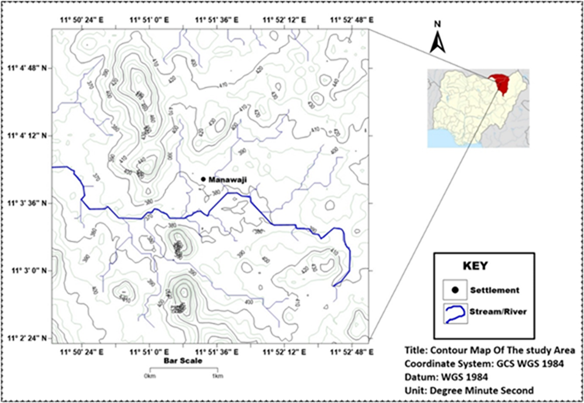
Figure : Location Map of the Study Area
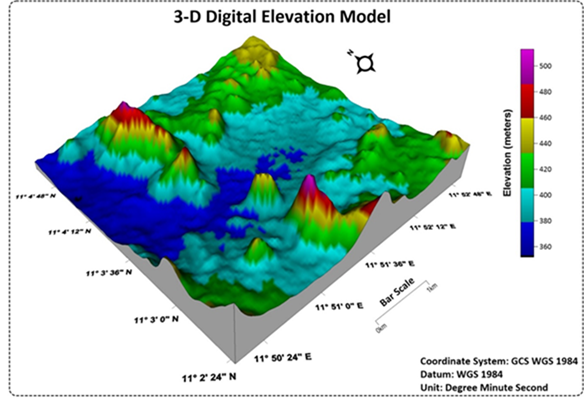
Figure : Digital Elevation Model showing the Relief of the Study Area
Field investigations to observe rock outcrops were conducted. A topographic map of Mutwe SE was obtained from the Yobe Geographic Information System Unit, Damaturu, Yobe State, Nigeria. The study area was carefully outlined with Manawaji at the centre (Figure 1). The bounding coordinates were then calculated and extracted manually from the topographic base map. Using Google Earth Pro, the study area boundary was delineated with the polygon tool and exported as a KML file, then converted into a comma-delimited text (CSV) file containing longitude (X), latitude (Y), and elevation (Z) values in decimal degrees. The dataset was imported into Golden Software Surfer (version 25.2.259) for gridding and surface generation. A Digital Elevation Model (DEM) was produced (Figure 2), after which a contour map (Figure 1) was generated. All coordinates were referenced to the WGS 1984 datum. Then the contour map was printed, gridded and analyzed to define physiographic features, accessways, and possible outcrop areas. Geological traverses were planned based on the area's structures and geomorphology (Coe, 2010). Observations were made on lithological and structural features. The mapping exercise was systematic to minimise sampling bias (Coe, 2010; Freeman, 2009). Materials used include a topographic map, GPS, compass, clinometer, geological hammer, measuring tape, masking tape, HCl, and a sampling bag.
Thin section preparation was performed according to standard protocols. A representative piece of the rock sample was first cut with a diamond saw to obtain an appropriate chip suitable for thin section preparation. Then, a carborundum powder was used to grind and polish the piece of rock obtained in order to provide a smooth surface. A glass slide was then marked with the sample code using a diamond pen. Then, heating both the rock chip and glass slide for around 5 minutes was carried out to facilitate adhesion. Next, a mixture of Araldite adhesive was used to bond the rock chip onto the marked slide. Air bubbles were removed from the thin section slide by pressing with forceps and reheating until properly fixed. The thin section prepared was allowed to dry for 5–10 minutes before being taken for grinding. The sample was ground to a standard thickness of 30 microns using a precision grinding machine. Then, the thin section was polished and cleaned with a detergent diluted with a methylated spirit to get rid of any stuck grain particles. A cover slip was finally affixed using Canada balsam, and care was taken to remove any trapped air bubbles. The prepared slides were then left to cure for a period of two days prior to petrographic analysis (Reed & Mergner, 1953).
An optical microscope was used to conduct a detailed petrographic examination of thin sections prepared from representative rock samples. The analysis was carried out using a polarizing microscope under both plane-polarized light (PPL) and cross-polarized light (XPL) to examine the optical properties of the constituent minerals. Key petrographic attributes were recorded under PPL, which include crystal shape, mineral habit, and color, with particular attention to any pleochroism. Additionally, under PPL, the presence and orientation of cleavage planes as well as relief of the minerals, were noted to assist in mineral identification. Under XPL, interference colors were carefully assessed to determine the maximum birefringence exhibited by each mineral phase, while the extinction angles were examined in relation to cleavage directions and crystal faces to infer crystallographic orientations. Additionally, under XPL, features such as crystal twinning, zoning, and alteration textures were also examined to provide further insights into the mineralogical and thermal history of the rocks (MacKenzie et al., 2017; Whitbread, 2022).
After the fieldwork and petrographic analyses, the results were integrated and used to produce a geological map (Figure 3) of the study area using Golden Software Surfer (version 25.2.259). The mapped lithological units and structural data were digitized and spatially referenced within the software environment to produce a detailed geologic map that shows the distribution of rock types and structural features in the study area.
The different rock types encountered in the study area will be discussed in terms of their field occurrence and petrographic examination to assess their economic potential. Five lithologies were observed in the study area, which are Bima Formation sandstones, fossiliferous Pindiga limestones, crystalline limestone, mylonite, and columnar basalts (Figure 3).
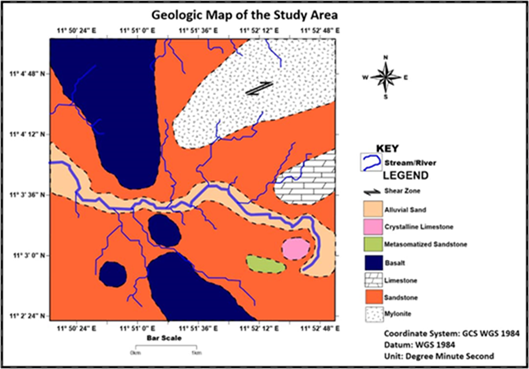
Figure : Geologic Map of the Study Area
The sandstone is the most prominent rock in the study area. Field observations indicate that the sandstone is light grey to reddish-brown, suggesting varying concentrations of iron oxide. It is also moderately to well-indurated that is predominantly medium- to coarse-grained with minor intercalations of clays and siltstones in some locations. Petrographic analysis reveals a quartz-dominated framework and feldspar (microcline) with occasional iron oxide occurrence. (Plate 1). The cementing material is primarily silica and iron oxides.
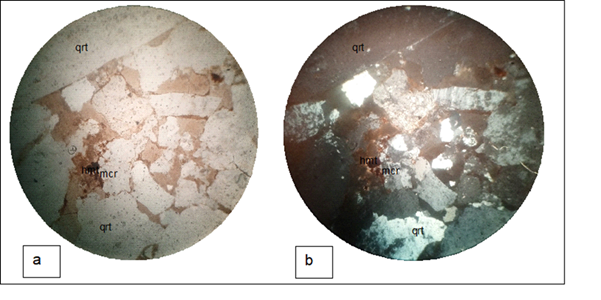
Plate : Photomicrograph (a: PPL and b: XPL) of the Highly Indurated Sandstone (sample ABTA) in the area (qrt: quartz; mcr: microcline; hmt: hematite), Magnification x400.
The sandstone also exhibits evidence of hydrothermal activity in the form of quartz-dominated veins (Plate 2a) that appear to be more resistant to weathering than the surrounding sandstone, which cuts across the primary bedding planes. In some sections, the sandstone extends several meters upward along the margins of the basalt (Plate 2b), which is indicative of interactions between sedimentary deposition and subsequent emplacement of the volcanics. At location 110 2’ 59.1’’ N, 110 1’ 59’’ E, the sandstone appears to be hard, consolidated, and light to dark green in color (Plate 2c), with some micaceous flakes (Plate 2d); hence, it is tentatively classified as metasomatized sandstone.
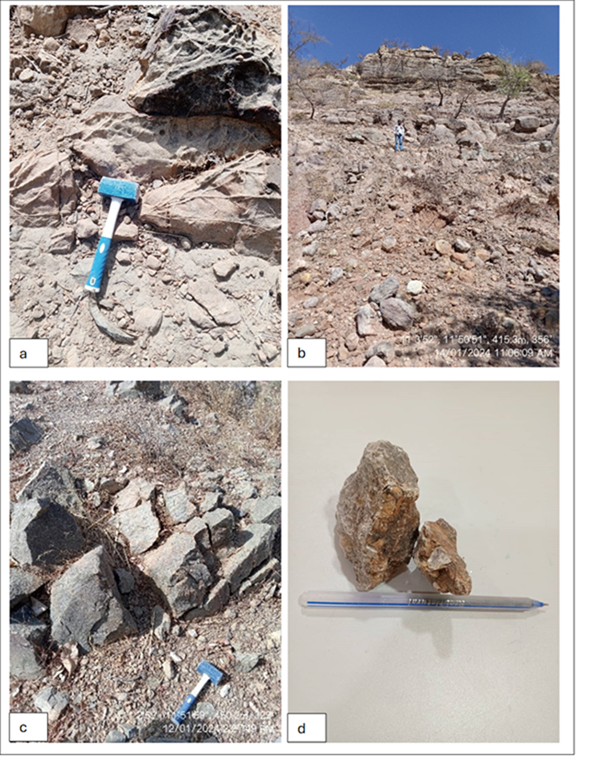
Plate : Bima Sandstone in the Study Area (a) Resistant Hydrothermal Veins in the Sandstone; (b) The sandstone extends several meters upward along the margins of the basalt; (c and d) Metasomatized sandstone (tentative).
The minor intercalations of clays and siltstones suggest fluvial to deltaic depositional processes (Scholle & Spearing, 1982) The presence of hydrothermal features suggests that the sandstone, which is part of the Bima Formation of the Gongola Arm of Benue Trough (El Nafaty, 2015; EL-Nafaty, 2017) in this area may have been influenced by localized tectonic or magmatic events, possibly related to the nearby basalt emplacement. This alteration could have affected the diagenetic history of the sandstone. The greenish coloration in the metasomatized unit may be associated with secondary alteration due to hydrothermal fluids containing sericite, epidote, or other green-colored alteration minerals (Fulignati, 2020) These fluids could have moved through the pre-existing fractures and faults and altered sandstones in this area, which resulted in the introduction of minerals that generate the rocks' greenish colors and increase their silica content (Berger, 1998; Browne, 1978; Goldschmidt, 1922; Lindgren, 1925; Pirajno, 1992; Putnis & Austrheim, 2013) The Bima Formation is an Albian continental sedimentary unit that unconformably overlies the Basement of the Upper Benue Trough, which is known for its fluvio-deltaic depositional environment and post-depositional modification (Kamale et al., 2019).
A well-consolidated limestone containing ammonite fossils (Plate 3b) was exposed at location N11⁰ 3’ 46.3’’ E11⁰ 52’ 39.7’’ 397 m within the study area in a terrain dominated by dark humus-rich soil, likely derived from weathering of shale. The limestone occurs as disjointed, angular to sub-rounded blocks (Plate 3a), suggesting in-situ weathering and disintegration. The surrounding soil, perhaps a remnant of a more shale lithology, seems to have been affected by preferential erosion. This results in the more resistant limestone remaining. Thus, the exposure has exhibited a differential weathering and fossil preservation, indicating that the carbonate-rich limestone is more resistant to chemical and physical weathering than the shale (Bland & Rolls, 2016; Earle & Panchuk, 2019).
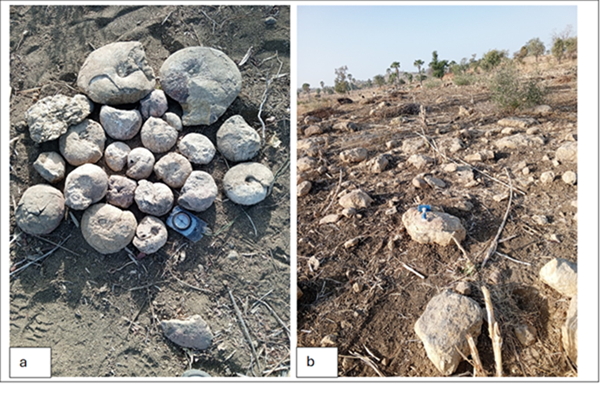
Plate : Limestone in the Study Area (a) disjointed, angular to sub-rounded blocks of the limestone; (b) Ammonites collected at the location
The Ammonites preserved indicate a marine depositional environment (Kennedy & Cobban, 1976) Ammonites are commonly known as index fossils of Mesozoic marine deposits, especially those of the Jurassic and Cretaceous (Lehmann, 2015; Levin & King, 2017) Their occurrence favors interpretation of deposition of the limestone in shallow, low-energy conditions (epicontinental sea) with dominance of carbonate sedimentation (Flügel, 2004) Such depositional environments were prevalent and widely distributed in parts of northern Nigeria during the early to mid-Cretaceous within the Yolde and Pindiga formation of Upper Benue Trough and their extensions (Aigbadon et al., 2024; Naibi et al., 2024; Obaje, 2009; Sarki Yandoka et al., 2015; Waziri et al., 2020).
These rocks are encountered in several locations in the study area; [N11⁰ 2’ 43.5’’, E11⁰ 51’ 39.7’’], [N11⁰ 4’ 15.2’’, E11⁰ 52’ 41.6’], [N11⁰ 3’ 54.4’’, E11⁰ 50’ 58.2’’], [N11⁰ 3’ 11.3’’, E11⁰ 51’ 18.9’’], [N11⁰ 3’ 39.1’’, E11⁰ 50’ 53.8’’] and [N11⁰ 3’ 47.6’’, E11⁰ 49’ 18.6’’]. They occur as well-developed, vertically oriented, polygonal jointed rock columns (Plate 4). They are also tall (405 – 545m above sea level) and form extensive ridges with a rugged, fragmented surface due to weathering and erosion. The columns are prominent at [N11⁰ 2’ 45’’, E11⁰ 51’ 18.6’’] Plate 4. The thin section (Plate 5) of the columnar basalt shows olivine, pyroxene and numerous opaque minerals which might be titanomagnetite or ilmenite. The columnar joints in the basalts are indicative of extrusive igneous activity, where basaltic lava, upon cooling and contracting, formed polygonal joints due to tensile stresses (Phillips et al., 2013) The vertical orientation and geometric regularity of the joints are classical features of columnar basalt that indicate emplacement and cooling in relatively horizontal lava flows (Das et al., 2025; Li & Liu, 2020; Mondal et al., 2022; Udinmwen et al., 2016).
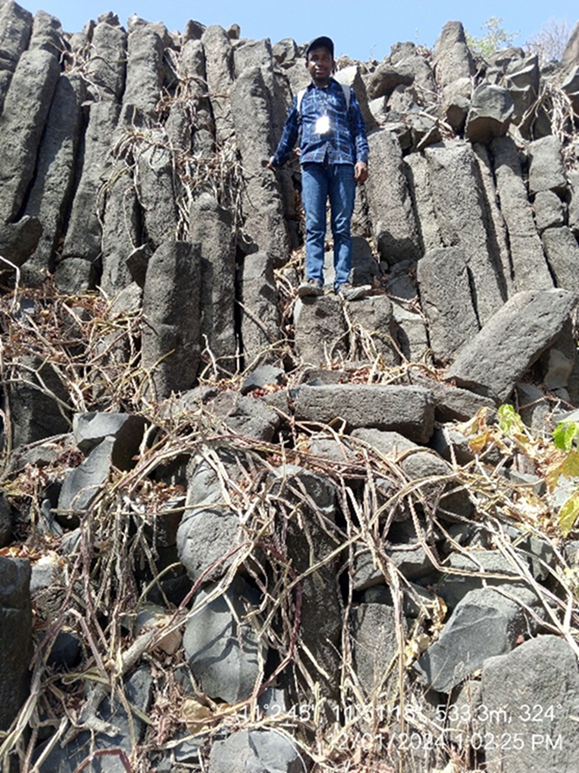
Plate : Collumnar Basalt in the Study Area
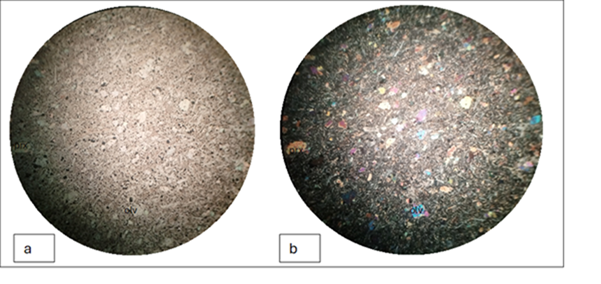
Plate : Photomicrograph of the Columnar Basalt; a: PPL view of sample ABDB, b: XPL view of sample ABDB; (olv: olivine; prx: pyroxene); Magnification x400.
The rocks represent a significant volcanic event linked to the Tertiary to Recent magmatic activities that affected parts of northern Nigeria (Fitton, 1980) They are similar to other basalts reported in the Benue Trough, such as those of the Biu, Awe and Yola areas (Adekeye & Ntekim, 2007; Lekmang et al., 2020; Obiefuna & Nggada, 2014) Hence, the basalts in the study area are part of rocks that are typically associated with post-Cretaceous continental rift-related volcanism, especially within the tectonic framework of the Benue Trough and the broader West and Central African Rift System (WCARS) (Auwalu et al., 2023; Moreau et al., 1987; Obiefuna & Nggada, 2014).
In the study area, the mylonite occurs as an inlier characterized by boulder-like, rounded to sub-rounded weathered blocks (Plate 6), forming a rugged terrain surrounded by a valley-like depression. The rock mass is strongly disintegrated and is striking roughly N50⁰E. Also, Adansonia digitata and Ficus platyphylla have grown on the outcrops which is a supplementary geomorphic and ecological evidence of deep-seated fracturing. These species are all deep-rooted perennial plants (Katende et al., 1995; Rahul et al., 2015) indicating a deep-seated aquiferous fault.
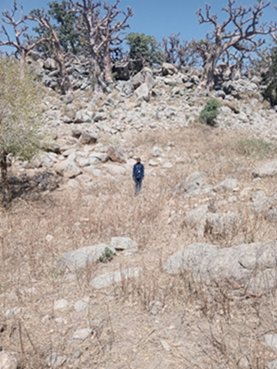
Plate : Mylonite in the Study Area
The boulders’ orientation along a dominant N50°E fracture trend suggests structural control likely inherited from regional tectonic processes, possibly linked to the Pan-African orogeny (Darko et al., 2019; Udinmwen, 2017) The presence of a valley-like depression encircling the mylonite outcrop is consistent with differential erosion, where the mylonite’s relative resistance to weathering has left it standing in high relief, while adjacent, more weatherable lithologies such as the sandstone, shale, and Limestone have been preferentially removed (Bland & Rolls, 2016; Earle & Panchuk, 2019) The thin-section petrography of the mylonite reveals an atypical assemblage dominated by quartz and biotite, with no recognisable primary feldspar (Plate 7).
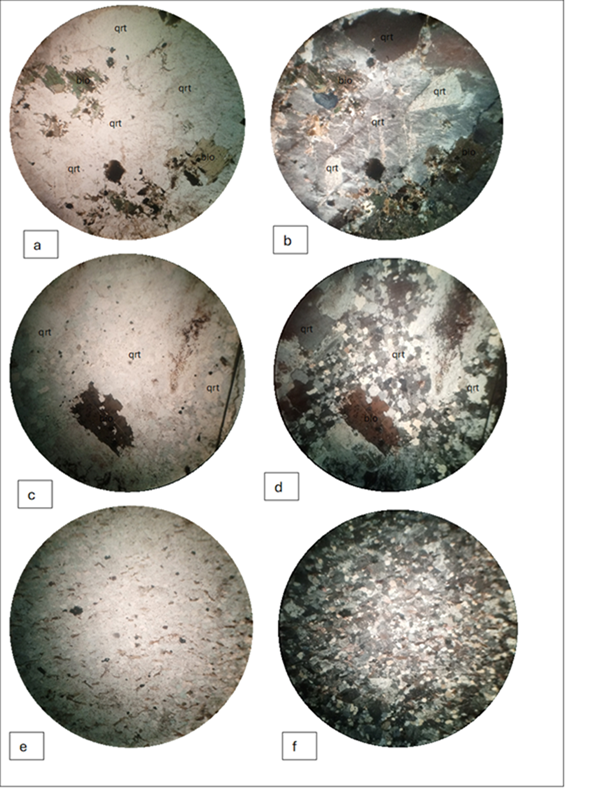
Plate : Photomicrograph of the Mylonite in the Study Area; a, c and e are PPL view of three samples of mylonite from three locations and b, d and f are the corresponding XPL views, respectively; (qrt: quartz; bio: biotite). Magnification x 400.
As seen in the thin sections, feldspars appear either absent or completely altered to a fine-grained matrix (beyond recognition). Texturally, some samples of the rock show pronounced grain-size reduction and is largely composed of a fine to very fine-grained matrix (Plate 7e and f). Grain shapes are elongated and commonly show a preferred orientation (Plate 7e and f) defining a strong planar fabric (mylonitic foliation?). Collectively, these petrographic characteristics, which are, grain-size reduction, oriented quartz and biotite, and feldspar depletion, are all indications that the rock is a mylonite. Finally, based on the petrographic mineral assemblages the mylonite in the study area is suggested a name: quartz–biotite mylonite as it has compositional affinity similar to the quartz–biotite mylonite reported by McCaig & Miller (1986) in the Mérens fault zone of the central Pyrenees.
The quartz–biotite mylonite in the study area records a progressive deformational history that began with the reworking of Pan-African granitoid suites (“Older Granites”), which are Neoproterozoic to early Paleozoic (600–500 Ma) medium- to coarse-grained, equigranular to porphyritic plutonic bodies of the Nigerian Basement Complex (Dada, 2008; Ferré et al., 2002; Hamdja Ngoniri et al., 2021; McCurry, 1971; Obaje, 2009), and their subsequent transformation into mylonite during the Pan-African Orogeny. Intense ductile shearing within deep crustal shear zones produced grain-size reduction, dynamic recrystallization, and a mylonitic foliation (Haldar, 2020) Feldspars depletion is most likely due to its conversion into muscovite and quartz represented by the reaction: 3KAlSi₃O₈ + 2H⁺ → KAl₃Si₃O₁₀(OH)₂ + 6SiO₂ + 2K⁺, that is possible during mylonitization as reported by O’Hara (1988) However, the absence of muscovite in the thin section suggests not only feldspar breakdown but also subsequent removal of newly formed mica due to extensive fluid–rock interaction and volume loss during mylonitization. For example, Newman & Mitra (1993) reported ~73–75% mass loss dominated by SiO₂, Al₂O₃, K₂O and Na₂O within a mylonite zone in Linville Falls of North Carolina. Such intense mass loss implies that hydrous phases like muscovite can dissolve under differential stress, with their components transported and reprecipitated elsewhere along fluid pathways (Putnis & Austrheim, 2013).
Exhumation transported these rocks to shallower crustal levels (Fernie et al., 2018; Ring et al., 1999), where brittle processes overprinted most of the earlier ductile structures. Brecciation and fracturing observed in the outcrops are most likely linked to any, combination, or all of the subsequent major tectono-magmatic events, including the opening of the Benue Trough during Gondwana breakup (Fernie et al., 2018), emplacement of Tertiary volcanic suites along Pan-African fault systems (Moreau et al., 1987), and episodic reactivation of Pan-African shear zones (Attoh et al., 2005; Legre et al., 2024; Skobelev et al., 2004; Viola et al., 2012).
Mylonitization is a process that involve intense ductile deformation along shear zones, producing fine-grained, foliated rocks characterized by dynamic recrystallization and progressive grain-size reduction (Higgins, 1971) A unique attribute of this process is its ability to generate rocks with unusual mineralogical compositions, depending on protolith type, deformation conditions, and fluid activity (Sun & Dong, 2023) Under mylonitization conditions, different mineral assemblages may develop, leading to the formation of feldspar-rich (Prior & Wheeler, 1999), feldspar-poor (Newman & Mitra, 1993), mica-rich (Newman & Mitra, 1993), or quartz-dominated (Chakraborty et al., 2020) mylonites.
The Pan-African Orogeny (∼600 ± 50 Ma) was an important Neoproterozoic event driven by the amalgamation of Gondwana that involved widespread crustal reworking, metamorphism, mylonitization, partial melting, and magmatic activites (Ajibade et al., 1987; Dada, 2008; Ekwueme & Kalsbeek, 2015; Halilu et al., 2025; Okpoli et al., 2022; Ugwuonah et al., 2017) The mylonite in the study area is possibly a reworked Pan African granite. Although several studies have documented the occurrence of Pan-African Orogenic mylonites in several places including, USA (Rast & Skehan, 1995), Zimbabwe (Carney et al., 1991), Mali (Lancelot et al., 1983) and Southwestern Nigeria (Adeoti & Okonkwo, 2017; Okpoli et al., 2022), this study is the first to report the occurrence of Pan-African mylonite in Northeastern Nigeria.
The crystalline limestone occurred at location N11 3’10’’, E11 52’ 6.3’’ as fine-grained, massive rocks exhibiting varying degrees of coloration (Plate 8a). Its color ranges from whitish to reddish-brown, and brownish with greenish to bluish hues (Plate 8b).
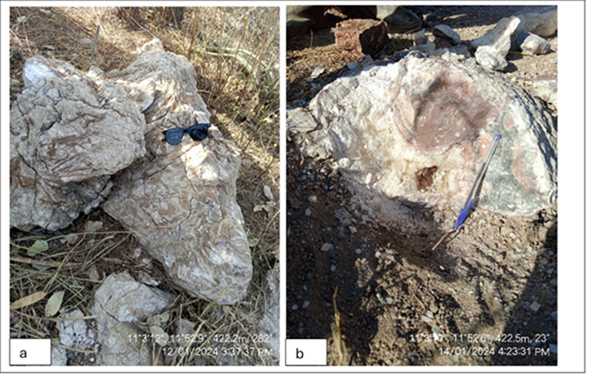
Plate : crystalline limestone in the Study Area (a) Massive white (b) reddish-brown with greenish to bluish hues
Plate 9 shows thin-section photomicrographs of the crystalline limestone. In plane-polarized light, thin-section of the crystalline limestone appears colorless with very low relief, and individual grains are not discernible, indicating a microcrystalline texture (Plate 9a, c & e). It shows a uniform appearance with no visible rhombohedral cleavage or distinct crystal boundaries due to the fine-grained nature of the rock. Under cross-polarized light, it exhibits low first-order gray interference colors, straight extinction, and an absence of twinning (Plate 9b, d & f). Numerous opaque minerals occur as disseminations in some of the samples (Plate 9a and b). The rocks are interpreted as predominantly composed of calcite. The absence of twinning as well as straight extinction exhibited by the calcite suggests that it does not experience deformation due to tectonic stress or metamorphic conditions, indicating precipitation under hydrothermal conditions.
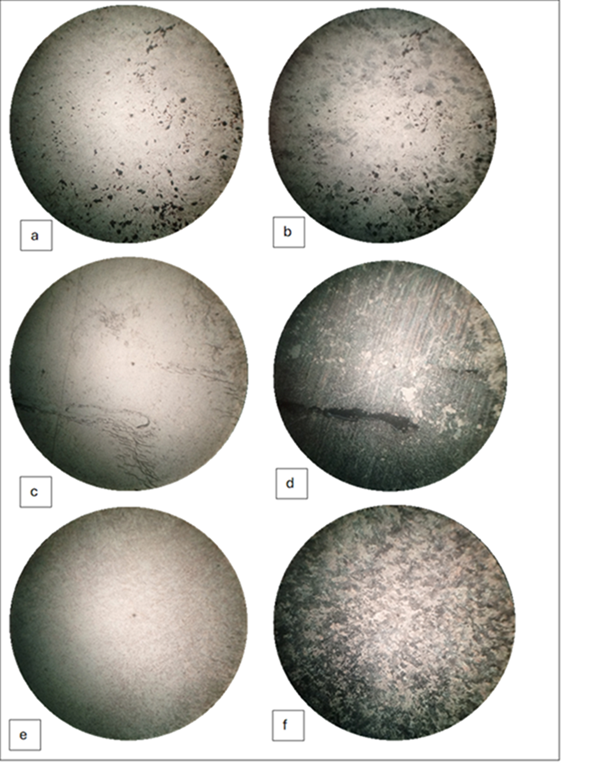
Plate : Photomicrograph of the Crystalline Limestone in the Study Area; a, c and e are PPL view of three samples and b, d and f are their corresponding XPL views respectively. Mag. X 400.
The field association of the crystalline limestone with columnar basalts indicates that Tertiary magmatism might be the source of the thermal and hydrothermal conditions necessary for carbonate mobilization and reprecipitation (Bute et al., 2024; Vincent et al., 2021b) The crystalline limestone may also have formed through hydrothermal processes associated with Mesozoic magmatism that occurred throughout the Benue Trough, where heated connate brines dissolved the Cretaceous limestones of the basin and subsequently precipitated calcite (Akande et al., 1989; Akande et al., 1988) Naibi et al. (2024) also reported the occurrence of crystalline limestone in the middle Benue Trough within the Cretaceous limestone of the Awgu Formation.
The diverse lithological and structural characteristics of the Manawaji area indicate considerable economic potential. Below are the economic potential areas:
From a construction application point of view, basalt is an important construction aggregate. This is due to its good compressive strength, resistance to abrasion, and chemical inertness (unreactive at environmental conditions) (Karasin et al., 2022) These features make it suitable for the production of road base materials, railway ballast, concrete aggregate, clay brick, and asphalt mixtures (Apaydın & Yılmaz, 2021; Bell, 2007; Li et al., 2021; Sanad et al., 2021; Wu, 2012) It is also highly suitable as a dimension stone for building cladding and other architectural uses due to its low porosity and physical durability (Alaimo et al., 2016; Osband et al., 2024; Saudi et al., 2024) Additionally, basalt may be processed to produce a high-performance material called basalt fiber that exhibits superior tensile strength, thermal stability, and resistance to corrosion and is environmental friendly (Chowdhury et al., 2022) Basalt fiber is increasingly used in construction, both for concrete reinforcement, composite rebar, as well as fire-resistant insulation panels and fabrics (Bhat et al., 2015; Branston et al., 2016; Lopresto et al., 2011).
The Manawaji area holds the potential to host gemstone (sapphire) mineralization (gem-quality corundum) as the basalts in the area share similar characteristics with those reported to host sappire from the Biu Plateau, northeastern Nigeria by Obiefuna & Nggada (2014) Sapphire is commonly regarded to be associated with alkali-rich basalts and their weathering products, which is a relationship well established in gem-producing areas such as Southeast Asia, Madagascar, Southern Vietnam, and some areas in Australia (Rakotondrazafy et al., 2008; Sutherland et al., 2015; Vu et al., 2021; Wong et al., 2017) The basalts in the Manawaji area offer a favorable geological environment for the mineralization of such gemstones (Aseeva & Kislov, 2021; Sun et al., 2024; Wang et al., 2022a).
The conditions needed to form sapphires are aluminum-rich, silica-undersaturated, high-temperature environments, conditions feasible either during basaltic magmatism or later in hydrothermal environments or both (Sorokina et al., 2019; Vu et al., 2021) As these basalts experience tropical weathering, corundum crystals can be released and concentrated further into eluvial or alluvial deposits in the soil. This process is confirmed by the locals residing in and around the Manawaji area. During the course of the fieldwork, community members reported recovering sapphire crystals from soils around the basaltic rocks after episodes of heavy rain. This phenomenon is in agreement with the process of formation of secondary sapphire placers (Aseeva & Kislov, 2021; Kislov et al., 2022; Schmetzer et al., 2016; Yui et al., 2006) If subsequent mineralogical and geophysical surveys confirm economic quantity of sapphire in Manawaji, the area could play an important role in Nigeria’s existing plans to diversify the economy through solid minerals development (Kojo et al., 2019; Ujah, 2025).
The study area exhibits a great potential for geological tourism and geoheritage. The columnar basalts are a stunning natural phenomenon of volcanic origin (Singtuen & Anumart, 2022) Due to their aesthetic value, educational importance, and close relationship with volcanic activity, columnar jointing (Plate 4) is globally recognized as a geoheritage feature (Mc Keever & Zouros, 2005) Iconic examples, like the Giant׳s Causeway in Northern Ireland and the Basaltic Monogenetic Volcanic Field of the Bakony–Balaton in Hungary, have been designated as international geosites and UNESCO World Heritage areas attracting thousands of geotourists each year (Crawford, 2016; Harangi & Korbély, 2023; Tomkeieff, 1940) Besides the columnar basalts, crystalline limestone in the Manawaji area could provided further scientific and geoeducational significance by serving as a real-world natural laboratory for students and researchers (Poulson & White, 1969).
Geotourism has been successfully incorporated into regional development strategies worldwide (Carrillo-Hernández et al., 2024; Dowling, 2011; Newsome, 2010; Newsome & Dowling, 2018; Ólafsdóttir, 2019) In turn, in geologically rich regions of Africa, areas such as the Vredefort Dome in South Africa and the Ngorongoro Crater in Tanzania, key geotourism centers have been developed. This has promoted conservation, scientific education, and economic activity (Greffrath & Roux, 2011; Żaba & Gaidzik, 2011) In Nigeria, such programs is gradually gaining recognition in places such the Zuma Rock and Idanre Hills (Anifowose & Kolawole, 2014; Mshelia et al., 2024) Therefore, developing a geopark or geotourism project in the Manawaji area will be vital for the diversification of the local economy, geoeducation advancement, and conservation of unique geological treasures for future generations.
Metasomatic enrichment of metals in sedimentary rocks that in contact with basalts, although not yet confirmed economic, is reported by Stanienda-Pilecki (2025) in the area of St. Anne’s Mountain, Opole Voivodeship, Strzelce Opolskie, Leśnica, Poland. Additionally, Deymar et al. (2018) describe alkali metasomatism as a process of Ti–REE–Y–U–Th mineralization. Key elements like Ti, Cr, V, Zr, Cu, Mo and Zn, could be enriched in the sedimentary rocks of Manawaji area which are vital for capacitors, battery technologies, high-performance alloys, and aerospace systems (Grohol & Veeh, 2023; USGS, 2023) If this is verified through geophysical surveys and mineralogical (further geochemical exploration) studies, then Manawaji has the potential to become a strategic exploration area for rare metals.
The groundwater potential of the Manawaji area is another important economic asset that should be of great consideration. The fluvio-deltaic Bima Formation has been reported as a very good aquifer because it has natural porosity and permeability (Bello et al., 2022) Sandstone aquifers have been widely utilized in arid and semi-arid settings for domestic water supply, irrigation, and livestock farming, owing to their ability to store and transmit water effectively (Domenico & Schwartz, 1998; Medici et al., 2016).
Beyond domestic use, such as agricultural activities and accessibility to clean drinking water, groundwater development in Manawaji could have broader economic implications, including industrial-scale bottling and international water exportation. The global demand for premium natural groundwater, especially in water-stressed nations such as Singapore, the UAE, and parts of Asia, has fostered a burgeoning global market for packaged natural water, valued at over $300 billion annually (IBWA, 2023; Shahin & Salem, 2015) High-purity groundwater, if discovered in this area, tested for quality, and properly branded, could be used as a marketable water resource. Other global countries such as France, China, and Italy have since launched bottled water export initiatives targeting increasing demand for naturally sourced water on international markets (Turkish Goods, 2023).
A thorough hydrogeological survey (i.e., electrical resistivity tomography, pumping tests, borehole lithologs) should be undertaken to identify aquifer limits, thicknesses, recharge areas, and sustainable yield. If done in a sustainable manner, this project could diversify Nigeria’s export profile beyond oil while improving the water security of communities around Manawaji.
This study evaluates the economic resource potentials of the rocks in Manawaji, Upper Benue Trough, Gulani, Nigeria. The interdisciplinary approach employed, integrating fieldwork with Thin section analysis, provides extensive support towards achieving the goal of assessing the economic potentials of the area. The area has five major lithologies (fluvio-deltaic sandstones of the Bima Formation, fossiliferous limestones of the Pindiga Formation, columnar basalts, mylonite, and crystalline limestone) and has five economic potentials (i) columnar basalt suitable for dimension stone and as raw material for basalt fiber production; (ii) gemstones (sapphire) potentials; (iii) high-purity groundwater potentials; (iv) geotourism and natural laboratory potentials; and (v) prospective sources of critical metals. Subsequent work can combine geophysical surveys, geochemical exploration (e.g., XRF, SEM-EDS, LA-ICP-MS) fluid inclusion analyses, and further mineralogical and beneficiation studies to assess subsurface alteration zones and the extractive potential of highlighted resources in this area.
Abodunrin, O. A., Fagbohun, B. J., & Anifowose, A. Y. B. (2024). Lithological discrimination and mapping in part of the upper Benue Trough using Landsat 8. Ife Journal of Science, 26(1), 131–143. [Crossref]
Abubakar, U., Hohl, S. V., Usman, M. B., Maigari, A. S., Tchouatcha, M. S., Tabale, R. P., Bello, A. M., Dalha, A., & Mukkafa, S. (2024). Provenance history, depositional conditions and tectonic settings during late Cenomanian – early Turonian time in the Gongola Sub-Basin of the Upper Benue Trough Nigeria: Evidence from major and trace elements geochemistry of the Kanawa shales from the Pindiga Formation. Journal of African Earth Sciences, 211, 105168. [Crossref]
Abubakar, U., Usman, M. B., Aliyuda, K., Dalha, A., Bello, A. M., & Linus, L. N. (2021). Major and trace element geochemistry of the shales of Sekuliye Formation, Yola Sub-Basin, Northern Benue Trough, Nigeria: implications for provenance, weathering intensity, and tectonic setting. Journal of Sedimentary Environments, 6(3), 473–484. [Crossref]
Adam, M. K., Dauda, M., & Hammajam, A. A. (2024). Characterization of Diatomite from Bularafa in Gulani Local Government Area of Yobe State, Nigeria. Int. Acad. J. Inf. Commun. Technol. Eng, 8, 14–20.
Adebisi, W. A., Folorunso, I. O., Abubakar, H. O., Olatunji, S., & Olaojo, M. O. (2024). Delineating Structural Features Related to Hydrothermal Alterations for Possible Mineralization in Share Area, Kwara State Nigeria Using Aeromagnetic Data. Indonesian Journal of Earth Sciences, 4(2), A1265. [Crossref]
Adekeye, J. I. D., & Ntekim, E. E. (2007). The Geochemistry and Petrogenesis of Basaltic Rocks of the Central Part of Yola Basin, Upper Benue Trough, Nigeria. Continental J. Earth Sciences, 1, 1–10. [Link]
Adeoti, B., & Okonkwo, C. T. (2017). Structural evolution of Iwaraja shear zone, southwestern Nigeria. Journal of African Earth Sciences, 131, 117–127. [Crossref]
Adetunji, A., Olarewaju, V. O., Ocan, O. O., Ganev, V. Y., & Macheva, L. (2016). Geochemistry and U-Pb zircon geochronology of the pegmatites in Ede area, southwestern Nigeria: A newly discovered oldest Pan African rock in southwestern Nigeria. Journal of African Earth Sciences, 115, 177–190. [Crossref]
Adewumi, T., & Salako, K. A. (2018). Delineation of mineral potential zone using high resolution aeromagnetic data over part of Nasarawa State, North Central, Nigeria. Egyptian Journal of Petroleum, 27(4), 759–767. [Crossref]
Ahmad, T. G., Haruna, A. I., Abdullahı, F., & Maıkore, F. I. (2022). Petrography and Geochemical Characterization of the Neoproterozoic Migmatites Around Mararraban Liman Katagum, Bauchi Nigeria. International Journal of Earth Sciences Knowledge and Applications, 4(2), 271–293.
Ahmed, H. A. (2022). Overview of Nigeria’s Solid mineral Potentials, Challenges and Prospects. FUTY Journal of the Environment, 16(1), 76–91.
Aigbadon, G. O., Igbinigie, N. S., Obasi, A. I., Akudo, E. O., Christopher, S. D., Ocheli, A., Igwe, D. O., Francis, A. J., Joseph, G. E., & Akor, D. J. (2024). Microfacies and mineralogical analyses of the late cretaceous carbonate rocks from The Central Benue Trough, Nigeria. Ife Journal of Science, 26(1), 101–118. [Crossref]
Ajibade, A. C., Woakes, M., & Rahaman, M. A. (1987). Proterozoic crustal development in the Pan-African regime of Nigeria. In A. Kröner (Ed.), Proterozic Lithospheric Evolution (pp. 259–271). [Crossref]
Akande, O., Zentelli, M., & Reynolds, P. H. (1989). Fluid inclusion and stable isotope studies of Pb-Zn-fluorite-barite mineralization in the lower and middle Benue Trough, Nigeria. Mineralium Deposita, 24(3), 183–191. [Crossref]
Akande, S. O., Horn, E. E., & Reutel, C. (1988). Minerology, fluid inclusion and genesis of the Arufu and Akwana PbZnF mineralization, middle Benue Trough, Nigeria. Journal of African Earth Sciences (and the Middle East), 7(1), 167–180. [Crossref]
Akinyemi, S. A., Hower, J. C., Madukwe, H. Y., Nyakuma, B. B., Nasirudeen, M. B., Olanipekun, T. A., Mudzielwana, R., Gitari, M. W., & Silva, L. F. O. (2022). Geochemical, mineralogical, and petrological characteristics of the Cretaceous coal from the middle Benue Trough Basin, Nigeria: Implication for coal depositional environments. Energy Geoscience, 3(3), 300–313. [Crossref]
Akpan, G. G., Uko, E. D., & Ngerebara, O. D. (2020). The Lithostratigraphy of the Near-Surface in Part of Sedimentary Kolmani Field in Northern Benue Trough, Nigeria, Using Soil Core and Seismic Refraction Data. Earth Sciences Pakistan, 4(2), 53–59. [Crossref]
Alaimo, G., Valenza, A., Enea, D., & Fiore, V. (2016). The durability of basalt fibres reinforced polymer (BFRP) panels for cladding. Materials and Structures, 49(6), 2053–2064. [Crossref]
Aliyu, A. H., Maigari, A., Umar, B., Nabage, N., Shirputda, J., Saidu, F., & Mohammed, M. (2024). Palynofacies Studies of the Late Cretaceous (Turonian-Maastrichtian) Strata from Jauro Jatau, Gongola Sub-Basin, Northern Benue Trough, Nigeria. FUDMA JOURNAL OF SCIENCES, 8(1), 335–344. [Crossref]
Anifowose, A. Y. B., & Kolawole, F. (2014). Appraisal of the Geotourism Potentials of the Idanre Hills, Nigeria. Geoheritage, 6(3), 193–203. [Crossref]
Anudu, G. K., Ofoegbu, C. O., Obrike, S. E., & Lemna, O. S. (2025). Imaging upper lithospheric structures of the Benue Trough and adjoining basement areas in Nigeria and Cameroon from satellite gravity data. Journal of African Earth Sciences, 222, 105488. [Crossref]
Apaydın, Ö. F., & Yılmaz, M. (2021). Correlation of petrographic and chemical characteristics with strength and durability of basalts as railway aggregates determined by ballast fouling. Bulletin of Engineering Geology and the Environment, 80(6), 4197–4205. [Crossref]
Aseeva, A. V, & Kislov, E. V. (2021). Sapphire of the Naryn-Gol Creek Placer Deposit (Buryatia, Russia). IOP Conference Series: Earth and Environmental Science, 720(1), 012011. [Crossref]
Attoh, K., Brown, L., & Haenlein, J. (2005). The role of Pan-African structures in intraplate seismicity near the termination of the Romanche fracture zone, West Africa. Journal of African Earth Sciences, 43(5), 549–555. [Crossref]
Auwalu, D., Abubakar, U., Bute, S. I., Daspan, R. I., Diyelmak, B. V, Yusuf, A., Tabale, R. P., & Babanya, A. A. (2023). Field relation and Petrographic study of Tertiary to Quaternary Volcanics in the Northern Benue Trough, Nigeria. Bima Journal of Science and Technology, 7(4), 164–171.
Ayok, J. (2016a). Mineralogy and Geochemistry of Mud Rock Units of the Late Cretaceous Kanawa and Gulani Formations, Eastern Gongola Basin, North-Eastern Nigeria: Implications for Provenance Studies. Journal of Environment and Earth Science, 6(8), 87–101.
Ayok, J. (2016b). Palaeocurrent and Petrographic Evaluations of Sandstones in the Cretaceous Gulani Formation of the Eastern Gongola Basin, North-east Nigeria: Its Implication for Provenance Studies. Journal of Environment and Earth Science, 6(7), 92–109. [Link]
Ayok, J. (2016c). Palaeocurrent and Petrographic Evaluations of Sandstones in the Cretaceous Gulani Formation of the Eastern Gongola Basin, North-east Nigeria: Its Implication for Provenance Studies. Journal of Environment and Earth Science, 6(7), 92–109.
Bell, F. G. (2007). Engineering geology. Elsevier.
Bello, A. M., Usman, M. B., Abubakar, U., Al-Ramadan, K., Babalola, L. O., Amao, A. O., Sarki Yandoka, B. M., Kachalla, A., Kwami, I. A., Ismail, M. A., Umar, U. S., & Kimayim, A. (2022). Role of diagenetic alterations on porosity evolution in the cretaceous (Albian-Aptian) Bima Sandstone, a case study from the Northern Benue Trough, NE Nigeria. Marine and Petroleum Geology, 145, 105851. [Crossref]
Berger, B. R. (1998). Hydrothermal alteration. In Geochemistry. Encyclopedia of Earth Science (pp. 331–333). Springer. [Crossref]
Bhat, T., Chevali, V., Liu, X., Feih, S., & Mouritz, A. P. (2015). Fire structural resistance of basalt fibre composite. Composites Part A: Applied Science and Manufacturing, 71, 107–115. [Crossref]
Bland, W., & Rolls, D. (2016). WEATHERING An introduction to the scientific principles. Routledge.
Branston, J., Das, S., Kenno, S. Y., & Taylor, C. (2016). Mechanical behaviour of basalt fibre reinforced concrete. Construction and Building Materials, 124, 878–886. [Crossref]
Browne, P. R. L. (1978). Hydrothermal Alteration in Active Geothermal Fields. Annual Review of Earth and Planetary Sciences, 6(1), 229–248. [Crossref]
Bukar, S. M., & Abba, H. M. (2022). Vegetation Structure and Diversity in Northern Yobe, Nigeria. Asian Journal of Plant Biology, 4(1), 36–42. [Crossref]
Bute, S. I., Yang, X., Suh, C. E., Girei, M. B., & Usman, M. B. (2020). Mineralogy, geochemistry and ore genesis of Kanawa uranium mineralization, Hawal Massif, eastern Nigeria terrane: Implications for uranium prospecting in Nigeria and Cameroon. Ore Geology Reviews, 120, 103381. [Crossref]
Bute, S. I., Yang, X., Yang, X., Girei, M. B., Kayode, A. A., & Lu, Y. (2022). Geochemistry, zircon U Pb ages and Hf isotopes of granites and pegmatites from Gubrunde region in the Eastern Nigeria Terrane: Insight into magmatism and tectonic evolution of the late Pan-African orogeny. Geochemistry, 82(1), 125809. [Crossref]
Bute, S. I., Zhou, J.-X., Luo, K., Girei, M. B., & Peter, R. T. (2024). Pb-Zn-Ba deposits in the Nigerian Benue Trough: A synthesis on deposits classification and genetic model. Ore Geology Reviews, 166, 105947. [Crossref]
Carney, J. N., Treloar, P. J., Barton, C. M., Crow, M. J., Evans, J. A., & Simango, S. (1991). Deep‐crustal granulites with migmatitic and mylonitic fabrics from the Zambezi Belt, northeastern Zimbabwe. Journal of Metamorphic Geology, 9(4), 461–479. [Crossref]
Carrillo-Hernández, Y. M., Ríos-Reyes, C. A., & Villarreal-Jaimes, C. A. (2024). Geotourism and Geoeducation: A Holistic Approach for Socioeconomic Development in Rural Areas of Los Santos Municipality, Santander, Colombia. Geoheritage, 16(4), 94. [Crossref]
Chakraborty, S., Majumdar, A. S., & Shukla, A. D. (2020). Role of fluid in strain softening within the Main Central thrust in Sikkim: The origin of quartz-rich mylonites. Journal of Structural Geology, 140, 104145. [Crossref]
Chowdhury, I. R., Pemberton, R., & Summerscales, J. (2022). Developments and Industrial Applications of Basalt Fibre Reinforced Composite Materials. Journal of Composites Science, 6(12), 367. [Crossref]
Coe, A. L. (2010). Geological field techniques. John Wiley & Sons.
Crawford, K. R. (2016). Expectations and Experiences of Visitors at the Giant’s Causeway. In World Heritage, Tourism and Identity (1st Edition, pp. 187–198). Routledge. [Crossref]
Dada, S. S. (2008). Proterozoic evolution of the Nigeria–Boborema province. Geological Society, London, Special Publications, 294(1), 121–136. [Crossref]
Dada, S. S., Bruguier, O., Goki, N. G., Oha, I. A., Rahaman, M. A. O., & Ibe, C. U. (2024). The Nigerian Migmatite-Gneiss Complex. In Geology and Natural Resources of Nigeria (pp. 29–39). CRC Press. [Crossref]
Dalha, A., Haruna, A. I., & Maigari, A. S. (2024). Geochemical Characterization of Baryte Mineralization in the Gombe Inlier, Gongola Sub-basin, Northern Benue Trough, Nigeria: Insights into Its Origin and Physico-Chemical Conditions. BIMA JOURNAL OF SCIENCE AND TECHNOLOGY, 8(4), 165–180. [Crossref]
Daniel Ajayi, M., & Opeloye, S. A. (2024). Foraminiferal Biostratigraphy, and Paleoenvironmental Interpretations in the Masa-01 Well, Western Offshore, Niger Delta Basin, Nigeria. Earth & Environmental Science Research & Reviews, 7(3), 01–22. [Crossref]
Darko, J. A. A., Ahenkorah, I., & Aakyiir, M. N. (2019). Petrogenesis, geochemistry and structural evidence of the neoproterozoic Pan-African orogenic event in Ghana, West Africa. SN Applied Sciences, 1(4), 293. [Crossref]
Das, A., Sarkar, S., Ray, D., & Sirvi, R. (2025). Columnar Jointing in the Deccan Continental Flood Basalt, India: Implications as a Martian Analogue. Earth and Planetary Science, 4(1), 26–38. [Crossref]
Daspan, R. I., Auwalu, D. A., Dachan, S. I., Diyelmak, V. B., Lekmang, I. C., & Fube, A. A. (2023). Geology, Geochemistry, and Economic Potential of Hydrothermal Baryte Mineralization in the Gombe Inlier, Upper Benue Trough, Nigeria. Science Forum (Journal of Pure and Applied Sciences), 23, 1017–1036. [Link]
Daya, A. M., Haruna, A. I., Maigari, A. S., & Yahuza, I. (2021). Geology and Possible Host for Bauxite Mineralization of Mambila Plateau, NE Nigeria. International Journal of Geoinformatics and Geological Science, 8(3), 22–28. [Crossref]
Denisová, N., & Piercey, S. J. (2023). Evolution of the Hydrothermal System Associated with the ABM Replacement-Style Volcanogenic Massive Sulfide Deposit, Finlayson Lake District, Yukon, Canada. Economic Geology, 118(5), 1055–1083. [Crossref]
Deymar, S., Yazdi, M., Rezvanianzadeh, M. R., & Behzadi, M. (2018). Alkali metasomatism as a process for Ti–REE–Y–U–Th mineralization in the Saghand Anomaly 5, Central Iran: Insights from geochemical, mineralogical, and stable isotope data. Ore Geology Reviews, 93, 308–336. [Crossref]
Dickina, A. P., Halliday, A. N., & Bowden, P. (1991). A Pb, Sr and Nd isotope study of the basement and mesozoic ring complexes of the Jos Plateau, Nigeria. Chemical Geology: Isotope Geoscience Section, 94(1), 23–32. [Crossref]
Domenico, P. A., & Schwartz, F. W. (1998). Physical and Chemical Hydrogeology (2nd ed.). Wiley.
Domínguez-Carretero, D., Proenza, J. A., González-Jiménez, J. M., Llanes-Castro, A. I., Torres, H., Aiglsperger, T., Torró, L., Capote, C., Nuez, D. de la, & Garcia-Casco, A. (2022). Ultramafic-hosted volcanogenic massive sulfide deposits from Cuban ophiolites. Journal of South American Earth Sciences, 119, 103991. [Crossref]
Dowling, R. K. (2011). Geotourism’s Global Growth. Geoheritage, 3(1), 1–13. [Crossref]
Drummond, D. A., Cloutier, J., Boyce, A. J., & Prave, A. R. (2020). Petrogenesis and geochemical halos of the amphibolite facies, Lower Proterozoic, Kerry Road volcanogenic massive sulfide deposit, Loch Maree Group, Gairloch, NW Scotland. Ore Geology Reviews, 124, 103623. [Crossref]
Earle, S., & Panchuk, K. (2019). Weathering, Sediment, & Soil. In Physical Geology (2nd ed.). B.C.: BCcampus. [Link]
Ekeleme, I. A., Uzoegbu, M. U., Haruna, A. I., & Ochiba, I. E. (2023). The Geology And Polymetallic Pb-Zn, Fe And Associated Mineralization In Parts Of Tsauni And Environs, North Central Nigeria. International Journal of Innovative Environmental Studies Research, 11(2), 62–71. www.seahipaj.org
Ekwok, S. E., Eldosuoky, A. M., Thompson, E. A., Ojong, R. A., George, A. M., Alarifi, S. S., Kharbish, S., Andráš, P., & Akpan, A. E. (2024). Mapping of geological structures and sediment thickness from analysis of aeromagnetic data over the Obudu Basement Complex of Nigeria. Journal of Geophysics and Engineering, 21(2), 413–425. [Crossref]
Ekwueme, B., & Kalsbeek, F. (2015). U-Pb geochronology of metasedimentary schists in Akwanga area of north central Nigeria and its implications for the evolution of the Nigerian basement complex. Global Journal of Geological Sciences, 12(1), 21. [Crossref]
Ekwueme, B. N., Caen-Vachette, M., & Onyeagocha, A. C. (1991). Isotopic ages from the Oban Massif and southeast Lokoja: implications for the evolution of the Basement complex of Nigeria. Journal of African Earth Sciences (and the Middle East), 12(3), 489–503. [Crossref]
El Nafaty, J. M. (2015). Geology and petrography of the rocks around Gulani Area, Northeastern Nigeria. Journal of Geology and Mining Research, 7(5), 41–57. [Crossref]
Elatikpo, S. M., Li, H., Zheng, H., Girei, M. B., Wu, J., & Amuda, A. K. (2022). Cryogenian crustal evolution in western Nigeria shield: whole-rock geochemistry, Sr-Nd and zircon U-Pb-Hf isotopic evidence from Bakoshi-Gadanya granites. International Geology Review, 64(18), 2626–2652. [Crossref]
Eldosouky, A. M., Ekwok, S. E., Akpan, A. E., Achadu, O.-I. M., Pham, L. T., Abdelrahman, K., Gómez-Ortiz, D., & Alarifi, S. S. (2022). Delineation of structural lineaments of Southeast Nigeria using high resolution aeromagnetic data. Open Geosciences, 14(1), 331–340. [Crossref]
El-Nafaty, J. M. (2015). Rare earth element and stable sulphur (δ 34S) isotope study of baryte–copper mineralization in Gulani area, Upper Benue Trough, NE Nigeria. Journal of African Earth Sciences, 106, 147–157. [Crossref]
EL-Nafaty, J. M. (2017). Geology and Trace Element Geochemistry of the Barite-Copper Mineralization in Gulani Area, NE Nigeria. IOSR Journal of Applied Geology and Geophysics, 5(2), 1–16.
Falebita, D., Folawewo, T., Olorunfemi, A., Falade, A., Aderoju, A., & Adepelumi, A. (2020). Upper crustal tectono-structural geomorphology inferred from satellite gravity and aeromagnetic anomalies beneath a basement-sedimentary transition region, southwestern, Nigeria. Arabian Journal of Geosciences, 13(21), 1170. [Crossref]
Fernie, N., Glorie, S., Jessell, M. W., & Collins, A. S. (2018). Thermochronological insights into reactivation of a continental shear zone in response to Equatorial Atlantic rifting (northern Ghana). Scientific Reports, 8(1), 16619. [Crossref]
Ferré, E., Gleizes, G., & Caby, R. (2002). Obliquely convergent tectonics and granite emplacement in the Trans-Saharan belt of Eastern Nigeria: a synthesis. Precambrian Research, 114(3–4), 199–219. [Crossref]
Fitton, J. G. (1980). The Benue trough and cameroon line — A migrating rift system in West Africa. Earth and Planetary Science Letters, 51(1), 132–138. [Crossref]
Flügel, E. (2004). Carbonate Depositional Environments. In Microfacies of Carbonate Rocks (pp. 7–52). Springer Berlin Heidelberg. [Crossref]
Freeman, T. (2009). Procedures in field geology. John Wiley & Sons.
Fulignati, P. (2020). Clay Minerals in Hydrothermal Systems. Minerals, 10(10), 919. [Crossref]
Galyamov, A. L., Volkov, A. V., & Sidorov, A. A. (2020). Distribution and Formation of Mississippi Valley–Type Lead–Zinc Deposits on the Eastern Margin of the Siberian Platform (Results of GIS Analysis of the Global Crust Model). Doklady Earth Sciences, 493(1), 504–507. [Crossref]
Girei, M. B., Li, H., Vincent, V. I., Algeo, T. J., Elatikpo, S. M., Bute, S. I., Ahmed, H. A., & Amuda, A. K. (2022). Genesis and timing of Mo mineralization in the Mada Ring Complex, north-central Nigeria: insights from whole-rock geochemistry, Nd-Sr isotopes, zircon U-Pb-Hf isotopes, and molybdenite Re-Os systematics. Mineralium Deposita, 57(4), 601–620. [Crossref]
Goldschmidt, V. M. (1922). On the metasomatic processes in silicate rocks. Economic Geology, 17(2), 105–123. [Crossref]
Greffrath, G., & Roux, C. J. (2011). The Vredefort Dome World Heritage Site: providing regulated and structured white water rafting practice towards a sustainable adventure tourism resource: sport and tourism. African Journal for Physical Health Education, Recreation and Dance, 17(3), 399–415.
Grohol, M., & Veeh, C. (2023). Study on the critical raw materials for the EU 2023 – Final report. [Link]
Groves, D. I., Santosh, M., Deng, J., Wang, Q., Yang, L., & Zhang, L. (2020a). A holistic model for the origin of orogenic gold deposits and its implications for exploration. Mineralium Deposita, 55(2), 275–292. [Crossref]
Groves, D. I., Zhang, L., & Santosh, M. (2020b). Subduction, mantle metasomatism, and gold: A dynamic and genetic conjunction. GSA Bulletin, 132(7–8), 1419–1426. [Crossref]
Guilbert, J. M., & Park, C. F. (1986). The Geology of Ore Deposits. W. H. Freeman and Company.
Haldar, S. K. (2020). Metamorphic rocks. In Introduction to Mineralogy and Petrology (pp. 269–289). Elsevier. [Crossref]
Halilu, M., Haruna, A. I., Abdullahi, F., Ahmed, M. S., Kamaunji, V. D., Girei, M. B., Sanislav, I. V., Lasheen, E. S. R., & Sami, M. (2025). Petrogenesis of migmatites from Liman Katagum area (Bauchi) North-East Nigeria: Constraints from U-Pb and Lu-Hf isotopic data. Journal of African Earth Sciences, 224, 105562. [Crossref]
Hamdja Ngoniri, A., Soh Tamehe, L., Ganno, S., Ngnotue, T., Chen, Z., Li, H., Ayonta Kenne, P., & Nzenti, J. P. (2021). Geochronology and petrogenesis of the Pan-African granitoids from Mbondo-Ngazi Tina in the Adamawa-Yadé Domain, Central Cameroon. International Journal of Earth Sciences, 110(6), 2221–2245. [Crossref]
Harangi, S., & Korbély, B. (2023). The basaltic monogenetic volcanic field of the Bakony–Balaton UNESCO Global Geopark, Hungary: from science to geoeducation and geotourism. Geoconservation Research, 6(1), 70–97.
Higgins, M. W. (1971). Cataclastic rocks. U.S. Geological Survey Professional Paper 687. U.S. Government Printing Office. [Link]
IBWA. (2023). 2023 IBWA Progress Report. [Link]
Igwe, E. O., & Okoro, A. U. (2016). Field and lithostratigraphic studies of the Eze-Aku Group in the Afikpo Synclinorium, southern Benue Trough, Nigeria. Journal of African Earth Sciences, 119, 38–51. [Crossref]
Kamale, H. I., Mohammed, D. D., Umaru, A. O., Usman, U. A., Shettima, B., Shettima, B., Ibrahim, Y., & Yerima, I. A. (2019). Geology and Baryte Mineralization of the Liji Area, Upper Benue Trough, NE Nigeria. IOSR Journal of Applied Geology and Geophysics, 7(5), 46–58.
Kamaunji, V. D., Kamaunji, D. Z., Gana, V., Ntekim, E. E., Ukaomah, C. F., & Madaki, A. I. (2022). Integrated Landsat multispectral imagery and airborne geophysical data for enhanced litho-structural mapping: A case study of Adamawa Massif, north-eastern Nigeria. Journal of African Earth Sciences, 195, 104677. [Crossref]
Kamaunji, V. D., Wang, L., Girei, M. B., Zhu, Y., Li, L., Vincent, V. I., & Amuda, A. K. (2023). Petrogenesis and tectonic implication of the alkaline ferroan granites from Ropp complex, north‐central Nigeria: Clues from zircon chemistry, <scp>U–Pb</scp> dating, and <scp>Lu–Hf</scp> isotope. Geological Journal, 58(1), 21–50. [Crossref]
Karasin, A., Hadzima-Nyarko, M., Işık, E., Doğruyol, M., Karasin, I. B., & Czarnecki, S. (2022). The Effect of Basalt Aggregates and Mineral Admixtures on the Mechanical Properties of Concrete Exposed to Sulphate Attacks. Materials, 15(4), 1581. [Crossref]
Kariya, I. I., Haruna, A. I., Isa, A., Kariya, I. I., Haruna, A. I., Jibrin, A. I., Haruna, I. V, Ayeni, J. K., & Faisal, A. (2024a). The Geology of Migmatite Rocks of Miya and Environs, Ganjuwa L. G. A., Bauchi State, Northeastern, Nigeria. International Journal of Agriculture and Earth Science, 10(4), 120–138. [Crossref]
Kariya, I. I., Haruna, A. I., Jibrin, A. I., Abdulmumin, Y., Ntekim, E. E., Abdulrauf, R., Muhammed, H. Y., & Hassan, A. M. (2024). The Petrology of Granitoid Rocks of Kariya and Environs, Bauchi Province, Northeastern, Nigeria. Bima Journal of Science and Technology, 8(1B), 331–343. [Crossref]
Katende, A. B., Birnie, A., & Tengnäs, B. (1995). Useful trees and shrubs for Uganda: Identification and management for agricultural and pastoral communities (RSCU Technical Handbook Series No. 10). . Regional Soil Conservation Unit (RSCU), Swedish International Development Cooperation Agency (Sida).
Kennedy, W. J., & Cobban, W. A. (1976). Aspects of ammonite biology, biogeography, and biostratigraphy (No. 17). London: Palaeontological Association.
Kislov, E. V., Aseeva, A. V., Vanteev, V. V., Sinyov, A. Y., & Eliseeva, O. A. (2022). Naryn-Gol Creek Sapphire Placer Deposit, Buryatia, Russia. Minerals, 12(5), 509. [Crossref]
Kitha, M., Ibrahim, H. A., Grema, H. M., & Abdulkarim, M. (2022). Geology and Structural Studies of Precambrian Basement Rocks Around Mahuta, Zuru Schist Belt, Northwestern Nigeria. Nigerian Journal of Basic and Applied Sciences, 29(2), 76–88. [Crossref]
Kojo Edeme, R., & C Nkalu, N. (2019). Predicting the Effects of Economic Diversification on Solid Mineral Development in Nigeria. Journal of Contemporary Research in Business, Economics and Finance, 1(4), 56–61. [Crossref]
Kolawole, T., Ajani, O. O., Adeniji, A. A., Aweda, F. O., & Adagunodo, T. A. (2024). Geophysical Investigation of the Subsurface Structural Competency Around College of Computing and Communication Studies, Bowen University, Iwo, Osun State, South West Nigeria. International Journal of Research and Innovation in Applied Science, IX(III), 57–68. [Crossref]
Lancelot, J. R., Boullier, A. M., Maluski, H., & Ducrot, J. (1983). Deformation and related radiochronology in a late Pan-African mylonitic shear zone, adrar des Iforas (Mali). Contributions to Mineralogy and Petrology, 82(4), 312–326. [Crossref]
Legre, J., Qin, Y., Kolawole, F., & Olugboji, T. (2024). The Intraplate Stress Field of West Africa. Geophysical Research Letters, 51(11). [Crossref]
Lehmann, J. (2015). Ammonite Biostratigraphy of the Cretaceous—An Overview. In C. Klug, D. Korn, K. De Baets, I. Kruta, & R. Mapes (Eds.), Ammonoid Paleobiology: From macroevolution to paleogeography. Topics in Geobiology (Vol. 44, pp. 403–429). Springer, Dordrecht. [Crossref]
Lekmang, I. C., Daspan, R. I., Dibal, H. U., Daku, S. S., Diyemak, V. B., Goyit, M. P., Ajol, F. A., Chup, A. S., Piwuna, R. M., Nimchak, R., Nimze, L. W., & Bata, T. P. (2020). Geochemical Characteristics of the Awe Basaltic Rocks within the Middle Benue Trough, Northcentral Nigeria. Science Forum (Journal of Pure and Applied Sciences), 21(1), 384–398. [Crossref]
Leng, C.-B., Wang, W., Ye, L., & Zhang, X.-C. (2019). Genesis of the late Ordovician Kukaazi Pb-Zn deposit in the western Kunlun orogen, NW China: New insights from in-situ trace elemental compositions of base metal sulfides. Journal of Asian Earth Sciences, 184, 103995. [Crossref]
Levin, H. L., & King, D. T. (2017). The Earth Through Time (11th edition). John Wiley & Son.
Li, Y., & Liu, J. (2020). Late Cenozoic columnar-jointed basaltic lavas in eastern and southeastern China: morphologies, structures, and formation mechanisms. Bulletin of Volcanology, 82(7), 58. [Crossref]
Li, Y., Zeng, X., Zhou, J., Shi, Y., Umar, H. A., Long, G., & Xie, Y. (2021). Development of an eco-friendly ultra-high performance concrete based on waste basalt powder for Sichuan-Tibet Railway. Journal of Cleaner Production, 312, 127775. [Crossref]
Lindgren, W. (1925). Metasomatism. Geological Society of America Bulletin, 36(1), 247–262. [Crossref]
Liu, L., Zhou, T., Fu, B., Ireland, T. R., Zhang, D., Liu, G., Yuan, F., Zha, X., & White, N. C. (2023). Multiple fluid sources in skarn systems: Oxygen isotopic evidence from the Haobugao Zn-Fe-Sn deposit in the southern Great Xing’an Range, NE China. American Mineralogist, 108(10), 1957–1972. [Crossref]
Lopresto, V., Leone, C., & De Iorio, I. (2011). Mechanical characterisation of basalt fibre reinforced plastic. Composites Part B: Engineering, 42(4), 717–723. [Crossref]
Lv, D., Wang, D., Li, Z., Liu, H., & Li, Y. (2017). Depositional environment, sequence stratigraphy and sedimentary mineralization mechanism in the coal bed- and oil shale-bearing succession: A case from the Paleogene Huangxian Basin of China. Journal of Petroleum Science and Engineering, 148, 32–51. [Crossref]
MacKenzie, W. S., Adams, A. E., & Brodie, K. H. (2017). Rocks and Minerals in Thin Section (Rev. 2nd ed). CRC Press/Balkema.
Magnin, B. P., Kuiper, Y. D., & Anderson, E. D. (2023). Ediacaran‐Ordovician Magmatism and REE Mineralization in the Wet Mountains, Colorado, USA: Implications for Failed Continental Rifting. Tectonics, 42(4). [Crossref]
Matheis, G., & Caen-Vachette, M. (1983). RbSr isotopic study of rare-metal bearing and barren pegmatites in the Pan-African reactivation zone of Nigeria. Journal of African Earth Sciences (1983), 1(1), 35–40. [Crossref]
Mc Keever, P. J., & Zouros, N. (2005). Geoparks: Celebrating Earth heritage, sustaining local communities. Episodes Journal of International Geoscience, 28(4), 274–278.
McCaig, A. M., & Miller, J. A. (1986). 40Ar-39Ar age of mylonites along the Merens Fault, central Pyrenees. Tectonophysics, 129(1–4), 149–172. [Crossref]
McCurry, P. (1971). Pan-African Orogeny in Northern Nigeria. GSA Bulletin, 82(11), 3251–3262. [Crossref]
Medici, G., West, L. J., & Mountney, N. P. (2016). Characterizing flow pathways in a sandstone aquifer: Tectonic vs sedimentary heterogeneities. Journal of Contaminant Hydrology, 194, 36–58. [Crossref]
Mondal, T. K., Chowdhury, A., Sain, A., & Chatterjee, S. (2022). Understanding the maturity of columnar joints and its spatial relationship with eruptive centre: A critical appraisal from the Rajmahal basalt, India. Physics of the Earth and Planetary Interiors, 326, 106867. [Crossref]
Moreau, C., Regnoult, J.-M., Déruelle, B., & Robineau, B. (1987). A new tectonic model for the Cameroon Line, Central Africa. Tectonophysics, 141(4), 317–334. [Crossref]
Morris, N., Potra, A., & Samuelsen, J. R. (2024). Tracing the Origin of Metal Ions in Mississippi Valley-Type Ore Deposits: Constraints from Lead Isotope Studies of Black Shales from the Midcontinent United States. Economic Geology, 119(6), 1355–1368. [Crossref]
Mshelia, I. H., Kpada, R. Y., & Jeffrey, U. S. (2024). The security impact of Nigerian fallow tourist attractions on the residents of surrounding communities. Discover Global Society, 2(1), 82. [Crossref]
Naibi, H. S., Obaje, N. G., Ishaq, Y., & Adamu, L. M. (2024). Bio-Chemo-Petrographical Characterization of Cenomanian-Turonian Carbonate Deposits in the Middle Benue Trough, Nigeria. FUDMA Journal of Sciences, 8(3), 124–136. [Crossref]
Newman, J., & Mitra, G. (1993). Lateral variations in mylonite zone thickness as influenced by fluid-rock interactions, Linville falls fault, North Carolina. Journal of Structural Geology, 15(7), 849–863. [Crossref]
Newsome, D. (2010). Geotourism: some examples from around the world and setting an agenda for the future. Second Global Geotourism Conference.
Newsome, D., & Dowling, R. (2018). Geoheritage and Geotourism. In Geoheritage (pp. 305–321). Elsevier. [Crossref]
Nyakuma, B. B., Jauro, A., Akinyemi, S. A., Faizal, H. M., Nasirudeen, M. B., Fuad, M. A. H. M., & Oladokun, O. (2021). Physicochemical, mineralogy, and thermo-kinetic characterisation of newly discovered Nigerian coals under pyrolysis and combustion conditions. International Journal of Coal Science & Technology, 8(4), 697–716. [Crossref]
Obaje, N. G. (2009). Geology and Mineral Resources of Nigeria (Vol. 120). Springer Berlin Heidelberg. [Crossref]
Obiefuna, G. I., & Nggada, I. S. (2014). Geochemical and Mineralogical Composition of Biu Basalt Deposit, Biu Area NE Nigeria. Research Journal of Environmental and Earth Sciences, 6(5), 241–250. [Crossref]
O’Hara, K. (1988). Fluid flow and volume loss during mylonitization: an origin for phyllonite in an overthrust setting, North Carolina U.S.A. Tectonophysics, 156(1–2), 21–36. [Crossref]
Okey, A. E. (2024). Lithostratigraphic Interpretation, Geotemperature Analysis, and Hydrocarbon Windows Determination in Seloken Field, Chad Basin, Northeastern Nigeria. International Journal of Research and Innovation in Applied Science, IX(VII), 376–389. [Crossref]
Okon, E. E., Kudamnya, E. A., Oyeyemi, K. D., Omang, B. O., Ojo, O., & Metwaly, M. (2022). Field Observations and Geophysical Research Applied to the Detection of Manganese (Mn) Deposits in the Eastern Part of Oban Massif, South-Eastern Nigeria: An Integrated Approach. Minerals, 12(10), 1250. [Crossref]
Okonkwo, C. T., Ganev, V. Y., Adepoju, M. O., Filipov, P., & Adetunji, A. (2024). Detrital zircon U-Pb geochronology of some metasedimentary units in the Jebba-Bode Saadu area southwestern Nigeria: Implications for northwest Africa – northeast Brazil connections in the Proterozoic. South African Journal of Geology, 127(4), 749–764. [Crossref]
Okoro, A. U., & Igwe, E. O. (2018). Lithostratigraphic characterization of the Upper Campanian – Maastrichtian succession in the Afikpo Sub-basin, southern Anambra Basin, Nigeria. Journal of African Earth Sciences, 147, 178–189. [Crossref]
Okpoli, C. C., Oladunjoye, M. A., & Herrero-Bervera, E. (2022). Evolutional model and syn-kinematic emplacement of a continental-scale strike-slip shear zone: an example of southwestern Nigeria. Arabian Journal of Geosciences, 15(14), 1277. [Crossref]
Ólafsdóttir, R. (2019). Geotourism. Geosciences, 9(1), 48. [Crossref]
Omietimi, E. J., Lenhardt, N., Yang, R., Götz, A. E., & Bumby, A. J. (2022). Sedimentary geochemistry of Late Cretaceous-Paleocene deposits at the southwestern margin of the Anambra Basin (Nigeria): Implications for paleoenvironmental reconstructions. Palaeogeography, Palaeoclimatology, Palaeoecology, 600, 111059. [Crossref]
Ominigbo, O. E. (2022). Evolution of the Nigerian basement complex: current status and suggestions for future research. Journal of Mining and Geology, 58(1), 229–236.
Onuigbo, E. N., Okoro, A. U., Okolo, C. M., & Okeke, H. C. (2020). Lithofacies, Palynostratigraphy and Paleoecology of the Outcropping Rock Succession at Ogbunike Old Toll Gate, Niger Delta Basin, Nigeria. Journal of Geography, Environment and Earth Science International, 24(3), 80–99. [Crossref]
Onyekuru, S. O., Anyanwu, D. J., Ezekiel, J., Fagorite, V. I., & Iwuagwu, C. J. (2024). Applied sequence stratigraphy and heterogeneity assessment of the Eocene clastics in the Niger Delta Basin, Nigeria. Journal of Sedimentary Environments, 9(2), 297–315. [Crossref]
Osagie, A. U., Eshanibli, A., & Adepelumi, A. A. (2021). Structural trends and basement depths across Nigeria from analysis of aeromagnetic data. Journal of African Earth Sciences, 178, 104184. [Crossref]
Osband, M., Eisenberg, M., & Ferguson, J. R. (2024). XRF Analysis of Village and Urban Basalt Architecture in the Hippos Territorium during the Roman Period. Archaeometry, 66(4), 719–738. [Crossref]
Oshilike, I. B., & Haruna, A. I. (2021). Geochemistry of metatexite and diatexite migmatite within Zongor, northeastern Nigeria: Constraints on petrogenesis and tectonic environment. IOSR Journal of Applied Geology and Geophysics, 9(4), 1–10. [Crossref]
Oyebamiji, A., Akinola, O., Olaolorun, O., Abdu-Raheem, Y., Adeoye, A., & Oguntuase, M. (2024). Geochemistry, petrogenesis and geological implication of granitic rocks in Igarra area, southwestern Nigeria. Applied Earth Science: Transactions of the Institutions of Mining and Metallurgy, 133(3), 174–189. [Crossref]
Ozulu, G.U., Aigbadon, G.O., & Igbinigie, N.S. (2024). Application of Markov Chain Stochastic Model to Lithofacies Analysis: A Case Study of Outcropping Rocks of the Lokoja Formation - Southern Bida Basin, Nigeria. Nigerian Journal of Pure and Applied Sciences, 37, 4994–5002. [Crossref]
Park, J.-W., Campbell, I. H., Chiaradia, M., Hao, H., & Lee, C.-T. (2021). Crustal magmatic controls on the formation of porphyry copper deposits. Nature Reviews Earth & Environment, 2(8), 542–557. [Crossref]
Phillips, J. C., Humphreys, M. C. S., Daniels, K. A., Brown, R. J., & Witham, F. (2013). The formation of columnar joints produced by cooling in basalt at Staffa, Scotland. Bulletin of Volcanology, 75(6), 715. [Crossref]
Pirajno, F. (1992). Hydrothermal Alteration. In Hydrothermal Mineral Deposits (pp. 101–155). Springer Berlin Heidelberg. [Crossref]
Plummer, C. C., Carlson, D., & Hammersley, L. (2016). Physical geology. McGraw-Hill/Education.
Popoola, S. O., Adegbie, A. T., Akinnigbagbe, E. A., & Unyimadu, J. P. (2021). Geochemistry of ferromanganese micronodules recovered from sediment-core in the western Nigeria continental margin, Eastern Equatorial Atlantic: Implications on the genesis and depositional history. Journal of African Earth Sciences, 184, 104369. [Crossref]
Poulson, T. L., & White, W. B. (1969). The Cave Environment. Science, 165(3897), 971–981. [Crossref]
Prior, D. J., & Wheeler, J. (1999). Feldspar fabrics in a greenschist facies albite-rich mylonite from electron backscatter diffraction. Tectonophysics, 303(1–4), 29–49. [Crossref]
Putnis, A., & Austrheim, H. (2013). Mechanisms of Metasomatism and Metamorphism on the Local Mineral Scale: The Role of Dissolution-Reprecipitation During Mineral Re-equilibration. In Metasomatism and the Chemical Transformation of Rock. Lecture Notes in Earth System Sciences. (pp. 141–170). Springer, Berlin, Heidelberg. [Crossref]
Rahul, J., Jain, M. K., Singh, S. P., Kamal, R. K., Anuradha, Naz, A., Gupta, A. K., & Mrityunjay, S. K. (2015). Adansonia digitata L. (baobab): a review of traditional information and taxonomic description. Asian Pacific Journal of Tropical Biomedicine, 5(1), 79–84. [Crossref]
Rajabpour, S., Hassanpour, S., & Jiang, S.-Y. (2023). Physicochemical evolution and mechanism of a skarn system: Insights from the world-class Mazraeh Cu deposit, NW Iran. Geological Society of America Bulletin. [Crossref]
Rakotondrazafy, A. F. M., Giuliani, G., Ohnenstetter, D., Fallick, A. E., Rakotosamizanany, S., Andriamamonjy, A., Ralantoarison, T., Razanatseheno, M., Offant, Y., Garnier, V., Maluski, H., Dunaigre, C., Schwarz, D., & Ratrimo, V. (2008). Gem corundum deposits of Madagascar: A review. Ore Geology Reviews, 34(1–2), 134–154. [Crossref]
Rast, N., & Skehan, J. W. (1995). Avalonian (Pan-African) mylonitic deformation west of Boston, U.S.A. Journal of Geodynamics, 19(3–4), 289–302. [Crossref]
Reed, F. S., & Mergner, J. L. (1953). Preparation of rock thin sections. American Mineralogist, 38(11–12), 1184–1203. [Link]
Ridley, J. (2013). Ore deposit geology. Cambridge University Press.
Ring, U., Brandon, M. T., Willett, S. D., & Lister, G. S. (1999). Exhumation processes. Geological Society, London, Special Publications, 154(1), 1–27. [Crossref]
Robb, L. (2021). Introduction to Ore-Forming Processes (Second Edition). John Wiley & Sons.
Rufai, A. F., Nuhu, K. S., Maigari, A. S., & Finthan, B. (2024). Chemostratigraphy of the Cretaceous Yolde Formation in Yola Sub-Basin, Northern Benue Trough, Ne Nigeria. Dutse Journal of Pure and Applied Sciences, 10(1c), 105–117. [Crossref]
Salawu, N. B. (2021). Aeromagnetic and digital elevation model constraints on the structural framework of southern margin of the Middle Niger Basin, Nigeria. Scientific Reports, 11(1), 21646. [Crossref]
Salawu, N. B., Dada, S. S., Orosun, M. M., Adebiyi, L. S., & Fawale, O. (2021). Influence of Pan-African tectonics on older Precambrian basement structural fabrics as revealed from the interpretation of aeromagnetic and remote sensing data of Ikole/Kabba region, southwestern Nigeria. Journal of African Earth Sciences, 179, 104189. [Crossref]
Salawu, N. B., Fatoba, J. O., Adebiyi, L. S., Ajadi, J., Saleh, A., & Dada, S. S. (2020). Aeromagnetic and remote sensing evidence for structural framework of the middle Niger and Sokoto basins, Nigeria. Physics of the Earth and Planetary Interiors, 309, 106593. [Crossref]
Sanad, S. A., Abel Moniem, S. M., Abdel-Latif, M. L., Hossein, H. A., & El-Mahllawy, M. S. (2021). Sustainable management of basalt in clay brick industry after its application in heavy metals removal. Journal of Materials Research and Technology, 10, 1493–1502. [Crossref]
Sarki Yandoka, B. M., Abubakar, M. B., Abdullah, W. H., Maigari, A. S., Hakimi, M. H., Adegoke, A. K., Shirputda, J. J., & Aliyu, A. H. (2015). Sedimentology, geochemistry and paleoenvironmental reconstruction of the Cretaceous Yolde formation from Yola Sub-basin, Northern Benue Trough, NE Nigeria. Marine and Petroleum Geology, 67, 663–677. [Crossref]
Saudi, H. A., Maha, F. A. A., Ahmaed, M. M., & Algendy, A. A. (2024). A Framework for Studying the Possibility of Using Basalt Cement as a Cladding Material for Indoor Spaces. Information Sciences Letters, 13(2), 377–386. [Crossref]
Schmetzer, K., Caucia, F., Gilg, H. A., & Coldham, T. S. (2016). Chrysoberyl Recovered with Sapphires in the New England Placer Deposits, New South Wales, Australia. Gems & Gemology, 52(1), 18–36. [Crossref]
Scholle, P. A., & Spearing, D. (1982). Sandstone Depositional Environments. American Association of Petroleum Geologists. [Crossref]
Shahin, S. M., & Salem, M. A. (2015). The Challenges of Water Scarcity and the Future of Food Security in the United Arab Emirates (UAE). Natural Resources and Conservation, 3(1), 1–6. [Crossref]
Sharman, E. R., Taylor, B. E., Minarik, W. G., Dubé, B., & Wing, B. A. (2015). Sulfur isotope and trace element data from ore sulfides in the Noranda district (Abitibi, Canada): implications for volcanogenic massive sulfide deposit genesis. Mineralium Deposita, 50(5), 591–606. [Crossref]
Shu, Q., Chang, Z., Hammerli, J., Lai, Y., & Huizenga, J.-M. (2017). Composition and Evolution of Fluids Forming the Baiyinnuo’er Zn-Pb Skarn Deposit, Northeastern China: Insights from Laser Ablation ICP-MS Study of Fluid Inclusions*. Economic Geology, 112(6), 1441–1460. [Crossref]
Singtuen, V., & Anumart, A. (2022). Characterisation and Evaluation of Columnar Basalt Geoheriatge in Thailand: Implication for Geotourism Management in Post-Quarrying Area. Quaestiones Geographicae, 41(1), 37–50. [Crossref]
Skobelev, S. F., Hanon, M., Klerkx, J., Govorova, N. N., Lukina, N. V., & Kazmin, V. G. (2004). Active faults in Africa: a review. Tectonophysics, 380(3–4), 131–137. [Crossref]
Sorokina, E. S., Rassomakhin, M. A., Nikandrov, S. N., Karampelas, S., Kononkova, N. N., Nikolaev, A. G., Anosova, M. O., Somsikova, A. V., Kostitsyn, Y. A., & Kotlyarov, V. A. (2019). Origin of Blue Sapphire in Newly Discovered Spinel–Chlorite–Muscovite Rocks within Meta-Ultramafites of Ilmen Mountains, South Urals of Russia: Evidence from Mineralogy, Geochemistry, Rb-Sr and Sm-Nd Isotopic Data. Minerals, 9(1), 36. [Crossref]
Stanienda-Pilecki, K. J. (2025). Metasomatism of the carbonate rocks of the contact zone with the basalt. Scientific Reports, 15(1), 14096. [Crossref]
Sun, S., & Dong, Y. (2023). High temperature ductile deformation, lithological and geochemical differentiation along the Shagou shear zone, Qinling Orogen, China. Journal of Structural Geology, 167, 104791. [Crossref]
Sun, W., Wang, J., Zhang, L., Zhang, C., Li, H., Ling, M., Ding, X., Li, C., & Liang, H. (2017). The formation of porphyry copper deposits. Acta Geochimica, 36(1), 9–15. [Crossref]
Sun, Y., Zhang, L., Yang, L., Li, D., Zhang, Y., Li, Z., Chen, G., Sun, X., Wang, H., & Wang, Y. (2024). Mineralogical Characteristics and Genesis of Trapiche-like Sapphire in Changle, Eastern North China Craton. Minerals, 14(4), 364. [Crossref]
Sutherland, F. L., Piilonen, P. C., Zaw, K., Meffre, S., & Thompson, J. (2015). Sapphire within zircon-rich gem deposits, Bo Loei, Ratanakiri Province, Cambodia: Trace elements, inclusions, U–Pb dating and genesis. Australian Journal of Earth Sciences, 62(6), 761–773.
Tashi, M., Mousivand, F., Ghasemi, H., Maghfouri, S., Maslennikov, V., Peter, J. M., & Sadykov, S. A. (2021). Evolution of the Garmab-e-Paein native copper-rich volcanogenic massive sulfide deposit from northeast Iran: Insights from sulfur isotope and chlorite chemistry. Ore Geology Reviews, 138, 104345. [Crossref]
Thomas, H. H., & MacAlister, D. A. (1909). Geology of Ore Deposits.
Tomkeieff, S. I. (1940). The basalt lavas of the Giant’s Causeway district of Northern Ireland. Bulletin of Volcanology, 6(1), 89–143. [Crossref]
Toyin, A., Adekeye, O. A., Bale, R. B., Sanni, Z. J., & Jimoh, O. A. (2016). Lithostratigraphic description, sedimentological characteristics and depositional environments of rocks penetrated by Illela borehole, Sokoto Basin, NW Nigeria: A connection between Gulf of Guinea Basins. Journal of African Earth Sciences, 121, 255–266. [Crossref]
Turkish Goods. (2023, March 13). Bottled water export in the world. Turkish Goods.
Ubit, G. E., Ibanga, I. M., Bassey, N. E., & Inim, I. J. (2022). Structural and Petrographic Study of Crystalline Rocks in Part Of Oban Massif, South-Eastern Nigeria. Journal of Applied Sciences and Environmental Management, 25(12), 2021–2027. [Crossref]
Udinmwen, E. (2017). Palaeostress configuration of Pan-African orogeny: evidence from the Igarra schist belt, SW Nigeria. Iranian Journal of Earth Sciences, 9, 85–93.
Udinmwen, E., Oden, M. I., Ukwang, E. E., & Edu, E. S. (2016). Structural Geometry of Ikom Columnar Basalt in the Ikom – Mamfe Basin, Southeastern Nigeria. Journal of Earth and Atmospheric Sciences, 1(1), 22–29.
Ugwuonah, E. N., Tsunogae, T., & Obiora, S. C. (2017). Metamorphic P–T evolution of garnet-staurolite-biotite pelitic schist and amphibolite from Keffi, north-central Nigeria: Geothermobarometry, mineral equilibrium modeling and P-T path. Journal of African Earth Sciences, 129, 1–16. [Crossref]
Ujah, E. (2025, February 17). Economic diversification: We need aggressive actions – Edun. Vanguard News. [Link]
USGS. (2023). Mineral Commodity Summaries 2023. [Link]
Vincent, V. I., Li, H., Girei, M. B., Ahmed, H. A., & Ntekim, E. E. (2021a). Genesis and age of Pb−Zn mineralization from the Ningi-Burra ring complex, North Central Nigeria: Constraints from zircon morphology, U−Pb dating and Lu−Hf isotopes. Lithos, 390–391, 106115. [Crossref]
Vincent, V. I., Li, H., Girei, M. B., Förster, M. W., Ahmed, H. A., & Ntekim, E. E. (2021b). In situ trace elements and sulfur isotope analysis of sulfides from the Akiri Cu ± (Ag) deposit, Benue Trough, North-central Nigeria: Implications for ore genesis. Geochemistry, 81(4), 125801. [Crossref]
Viola, G., Kounov, A., Andreoli, M. A. G., & Mattila, J. (2012). Brittle tectonic evolution along the western margin of South Africa: More than 500Myr of continued reactivation. Tectonophysics, 514–517, 93–114. [Crossref]
Vu, D. T. A., Fanka, A., Salam, A., & Sutthirat, C. (2021). Variety of Iron Oxide Inclusions in Sapphire from Southern Vietnam: Indication of Environmental Change during Crystallization. Minerals, 11(3), 241. [Crossref]
Wada, M., Haruna, A. I., Maigari, A. S., Jibrin, A. I., Kariya, I. I., Aga, T., & Gayyemi, H. R. (2024). Geology and Economic Potentials of Migmatite Around Filin Shagari, Kafin Madaki (SHEET 129 NW & SW) Bauchi N.E, Nigeria. IIARD International Journal of Geography & Environmental Management, 10(3), 321–344. [Crossref]
Wanah, B. B., & Kore, S. Z. (2020). Analysis of Chemical Constituents of Rocky Outcrops in Sollare, Gulani Local Government Area of Yobe State, Nigeria. Bima Journal of Science and Technology, 4(1), 413–425.
Wang, G.-Y., Yu, X.-Y., & Liu, F. (2022a). Genesis of Color Zonation and Chemical Composition of Penglai Sapphire in Hainan Province, China. Minerals, 12(7), 832. [Crossref]
Wang, Q., Yang, L., Zhao, H., Groves, D. I., Weng, W., Xue, S., Li, H., Dong, C., Yang, L., Li, D., & Deng, J. (2022b). Towards a universal model for orogenic gold systems: A perspective based on Chinese examples with geodynamic, temporal, and deposit-scale structural and geochemical diversity. Earth-Science Reviews, 224, 103861. [Crossref]
Waziri, M. I., Adamu, L. M., Yunusa, L. J., Adoze, U. J., & Umaru, A. O. (2020). Lithological Mapping and characterization of the Yolde Formation around Gombe Inlier, Gongola Sub-Basin, Northeastern Nigeria: Implication on Facies association and Paleoenvironmental Reconstruction. FUTY Journal of the Environment, 14(3), 55–72. [Link]
Wong, J., Verdel, C., & Allen, C. M. (2017). Trace-element compositions of sapphire and ruby from the eastern Australian gemstone belt. Mineralogical Magazine, 81(6), 1551–1576. [Crossref]
Wu, R. H. (2012). The Application of Basalt Fiber in Building Materials. Advanced Materials Research, 450–451, 499–502. [Crossref]
WWO. (n.d.). Potiskum weather averages. World Weather Online. Retrieved March 23, 2025, from [Link]
Xiong, Y., Tan, X., Wu, K., Xu, Q., Liu, Y., & Qiao, Y. (2021). Petrogenesis of the Eocene lacustrine evaporites in the western Qaidam Basin: Implications for regional tectonic and climate changes. Sedimentary Geology, 416, 105867. [Crossref]
Xu, H., Sun, X., Xiao, K., Suo, S., Huang, X., Liu, S., & Zheng, M. (2024). Classification of volcanogenic massive sulfide deposits in North Qilian, China: Evidenced from lithostratigraphy and geodynamic setting. Ore Geology Reviews, 173, 106228. [Crossref]
Yui, T.-F., Wu, C.-M., Limtrakun, P., Sricharn, W., & Boonsoong, A. (2006). Oxygen isotope studies on placer sapphire and ruby in the Chanthaburi-Trat alkali basaltic gemfield, Thailand. Lithos, 86(3–4), 197–211. [Crossref]
Żaba, J., & Gaidzik, K. (2011). The Ngorongoro Crater as the biggest geotouristic attraction of the Gregory Rift (Northern Tanzania, Africa)-geographical setting. Geotourism/Geoturystyka, 3–26. [Link]
Zailani, B. F., Haruna, I. A., Maigari, S. A., & Baba, Z. F. (2021). Petrography and Geochemical Reconstruction of Provenance and Melt Extract Estimation of Migmatites around Dungulbi Area of Bauchi State. IOSR Journal of Applied Geology and Geophysics, 9(4), 53–65. [Crossref]
Zheng, S., Gu, X., Zhang, Y., Wang, J., & Peng, Y. (2024). Origin of the Saibo-Lamasu Skarn Cu deposit, Western Tianshan, Xinjiang, NW China: Evidence from geology, mineral chemistry, fluid inclusions, stable isotopes, and organic geochemistry. Journal of Asian Earth Sciences, 259, 105870. [Crossref]